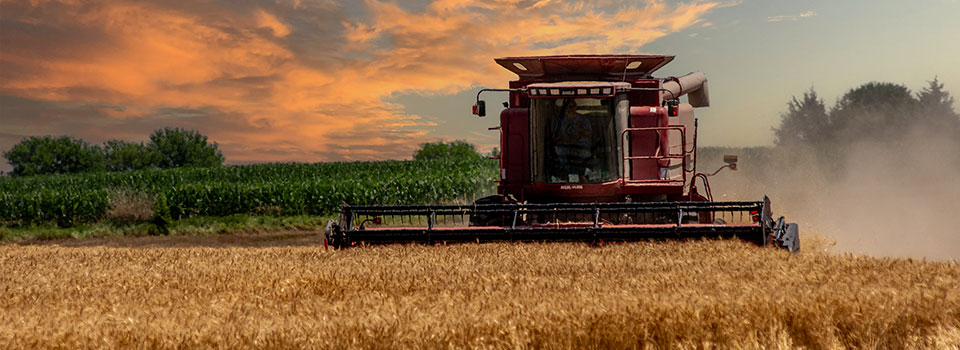
The Doctor is In: K-State and Kansas Wheat will host meetings in Dodge City and Wichita to provide updated research to the state's wheat producers.
State wheat experts to outline best practices for growing wheat in Kansas
Kansas Wheat Rx planned for Dodge City, Wichita
At a glance: K-State and Kansas Wheat will host two public meetings -- called Kansas Wheat Rx -- to share suggested management practices for the economical and sustainable production of high-quality winter wheat in Kansas.
More information: Romulo Lollato, 785-532-0397, Lollato@ksu.edu
Related: Kansas Wheat Variety Guide (2023) | Kansas Performance Tests with Winter Wheat Varieties (2022) | Dual-Purpose Wheat Variety Performance (2023) | Wheat Insect Pest Management (2022)
Feb. 27, 2024
By Pat Melgares, K-State Research and Extension news service
MANHATTAN, Kan. – Wheat growers in Kansas, take notice: The doctor is in.
K-State Research and Extension and Kansas Wheat are hosting a pair of meetings in Dodge City (March 7) and Wichita (March 8) to share what those organizations term “a prescription for producing high-yielding and high-quality wheat in a sustainable manner.”
The meetings – called Kansas Wheat Rx – combine suggested management practices for the economical and sustainable production of high-quality winter wheat in Kansas. The information is based on research conducted at Kansas State University and funded – at least in part – by Kansas Wheat, a cooperative agreement between the Kansas Wheat Commission and the Kansas Association of Wheat Growers.
The Dodge City meeting will be held from 8:30 a.m. to 3 p.m. at the Depot Theater, 201 E. Wyatt Earp Blvd. The Wichita meeting will be held from 8:30 a.m. to 3 p.m. at the Doubletree Hotel at the Airport, 2098 Airport Road.
Registration is available free to members of the Kansas Association of Wheat Growers. The registration fee for non-members is $110, which includes membership to KAWG.
The lineup of wheat experts includes K-State faculty members Romulo Lollato, Carlos Bonini Pires, Kelsey Andersen Onfore, Dorivar Ruiz Diaz, Dan O’Brien and Gregg Ibendahl, as well Carlos Bonini Pires and Logan Simon.
Among numerous topics, they will discuss:
- Cover crops and soil health.
- The benefit of wheat to cropping systems.
- Soil fertility.
- Important wheat diseases and fungicides.
- The economics of wheat production.
The full agenda is available online.
“We cannot change the impact of weather on each year’s crop, but we can arm wheat producers with the knowledge they need to maximize profitability through the genetic potential of new varieties and best management practices,” said Aaron Harries, vice president of research and operations for Kansas Wheat.”
Kansas Wheat has funded much of the research conducted at K-State, “from the importance of variety selection to the practices and tools farmers can use to improve quality,” according to Harries.
Much of the university’s wheat research is available in numerous publications available online. More information is also available at local extension offices in Kansas.
***

K‑State Research and Extension is a short name for the Kansas State University Agricultural Experiment Station and Cooperative Extension Service, a program designed to generate and distribute useful knowledge for the well‑being of Kansans. Supported by county, state, federal and private funds, the program has county extension offices, experiment fields, area extension offices and regional research centers statewide. Its headquarters is on the K‑State campus in Manhattan. For more information, visit www.ksre.ksu.edu. K-State Research and Extension is an equal opportunity provider and employer.