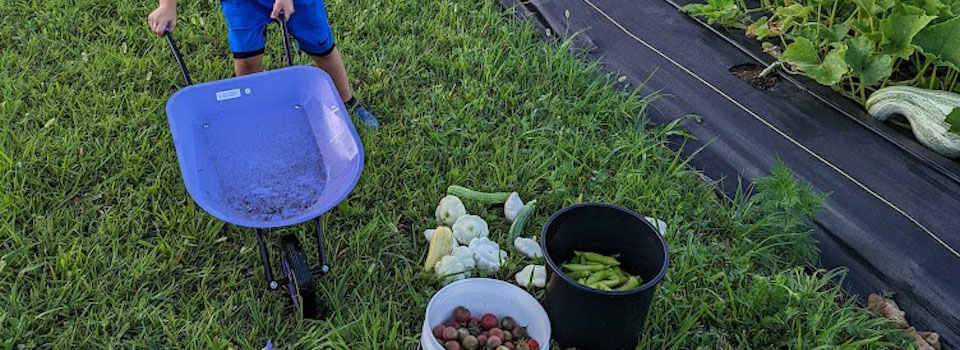
Horticultural therapy clients with mobility concerns can practice grasping, pinching and planting different seeds to recover from strokes or other brain injuries. Children who have attention deficit hyperactivity disorder also benefit, says K-State horticulture expert Cynthia Domenghini.
Healing through horticultural therapy
K-State horticulture expert discusses how horticultural therapy may help with afflictions like dementia, ADHD
At a glance: Participating in horticultural therapy sessions brings relief to people experiencing mental and physical ailments, K-State horticulture expert Cynthia Domenghini said.
More information: Cynthia Domenghini, Cdom@ksu.edu
Related: K-State Department of Horticulture and Natural Resources | The practice and profession of horticultural therapy in the United States
July 8, 2024
By Jacob Klaudt, K-State Research and Extension news service
MANHATTAN, Kan. – With most of modern medicine treating patients inside a physician’s office, more and more people forget about the curative benefits of being involved with nature.
Horticultural therapy, an innovative method of healing using gardening, reconnects people with the natural world while relieving many health concerns, Kansas State University horticulture expert Cynthia Domenghini said.
“It’s the intentional use of growing plants to provide benefit for humans. Within horticultural therapy, there are specific goals involving a diagnosed condition, and plants are used to achieve them,” she said.
Oftentimes, horticultural therapy accompanies other modalities to help clients accomplish those goals.
“It’s not uncommon for a horticultural therapist to work alongside a physical or occupational therapist to create a treatment team where everyone works together,” Domenghini said.
Horticultural therapy aids clients diagnosed with dementia by sharpening their ability to remember certain garden tasks.
“They do a seed-starting activity that could involve practicing two steps to follow,” Domenghini said. “The client works on their memory retention by performing those two steps, and then over time and with progress, they’re remembering four tasks with limited reminders.”
Therapists determine the success of a horticultural therapy program not by the client’s actual gardening abilities, but on the progress and gains seen with their condition.
Domenghini said: “It’s completely based on the process, not the product. Take, for example, the client who starts seeds (and) the plants don’t survive, but they were able to follow all the steps correctly. They’ve still achieved the goal of that exercise.”
Children who have attention deficit hyperactivity disorder also benefit from horticultural therapy, Domenghini said.
“Time spent working in nature can help restore a child’s attention span. It’s called attention restoration theory,” she said. “For instance, when a child is focused on so many things all at once – like homework or final exams – spending time out gardening can relieve that and give them a sense of calm. A horticultural therapy session helps direct their attention away from those stressful things and provides a release of that intense focus.”
Additionally, horticultural therapy assists visually impaired people with finding jobs in greenhouses and other gardening spaces.
“They learn vocational skills through horticulture and participate in all tasks from starting seeds to transplanting, and eventually, selling their plants at farmers markets. They learn how to navigate greenhouses and other areas with limited vision while being taught how to become gainfully employed,” Domenghini said.
According to Domenghini, horticultural therapy enhances physical strength as well when therapists create tasks with “appropriate challenge” for clients.
“Everything in gardening requires physical effort. Planting a tree, digging a hole and spreading mulch are all activities that can coincide well with other physical therapy and make clients stronger,” she said. “Balance is another thing that’s often improved by simply walking between even surfaces and mulch surfaces.”
People often mistake horticultural therapy for therapeutic horticulture (gardening for overall wellbeing).
“It seems like the same thing, but it isn’t. Horticultural therapy is more than just a ‘walk in the garden.’ Some think that all they have to do is walk in nature and they’ve provided themselves therapy, which isn’t the case. That thought process has created a lot of confusion,” Domenghini said.
Specialized equipment allows for physically disabled people to partake in horticultural therapy.
“Some therapists use a raised garden bed where the client is able to sit in a wheelchair and garden from a seated position,” Domenghini said. “There are also ergonomic shovels and other tools designed to limit the strain on a person’s wrist. Long-handled shovels and rakes are also available, so clients don’t have to bend over as frequently.”
People may improve their social skills with group horticultural therapy sessions. Yet, Domenghini said they must still revolve around the person’s goals.
“If clients have social goals, group therapy makes sense,” she said. “I’ve visited horticultural therapy programs for children who learned how to socialize appropriately while gardening. It was a tool that helped them engage in dialogue with their peers without making it awkward.”
“In a group setting,” she adds, “if a therapist has 20 clients at once, they must make modifications to the session so they can evaluate progress for each person.”
At the end of the day, more people need to immerse themselves in nature, said Domenghini, inviting them to try out horticultural therapy.
“We can all benefit mentally by spending time outdoors or bringing the outdoors in,” she said. “As a whole, we need to be put back in touch with the natural world. You can take that a step further by getting involved with a horticultural therapist and that’s fantastic.”
“My recommendation for anyone interested is to go to the American Horticultural Therapy Association’s website to find a licensed therapist in your area.”
***

K‑State Research and Extension is a short name for the Kansas State University Agricultural Experiment Station and Cooperative Extension Service, a program designed to generate and distribute useful knowledge for the well‑being of Kansans. Supported by county, state, federal and private funds, the program has county extension offices, experiment fields, area extension offices and regional research centers statewide. Its headquarters is on the K‑State campus in Manhattan. For more information, visit www.ksre.ksu.edu. K-State Research and Extension is an equal opportunity provider and employer.