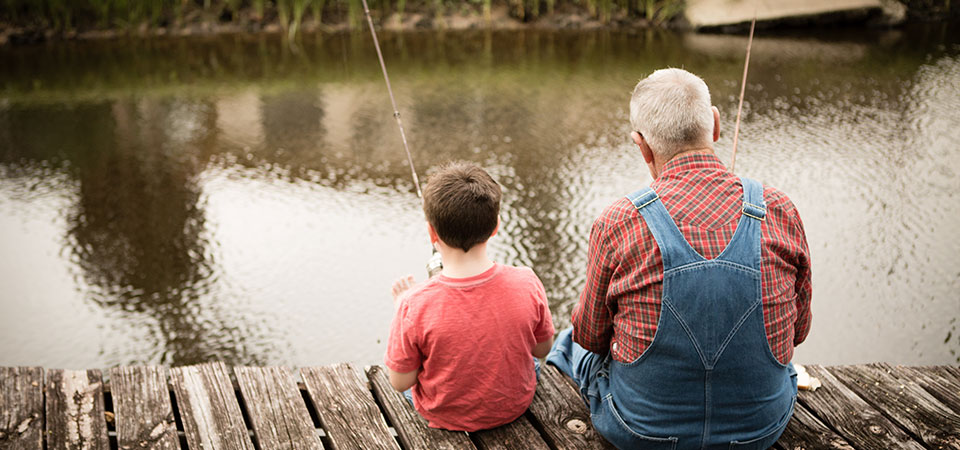
K-State aging and adult development specialist Erin Martinez encourages grandparents to seek ways to have a meaningful relationship with their grandchild.
Tips for grandparents: Setting boundaries and communication are key
K-State expert shares tips on maintaining harmony in the family
At a glance: Communication is key to healthy relationships, and becoming a grandparent is no different. K-State's Erin Martinez urges parents and grandparents to communicate often and be clear about boundaries when a new baby arrives.
More information: Erin Martinez, 785-532-5510, erinmartinez@ksu.edu
Related: Essential Steps to Healthy Aging | Keys to Embracing Aging (Series): Aging 101 | Positive Attitude | Physical Activity | Stress Management
Aug. 19, 2024
By Pat Melgares, K-State Research and Extension news service
MANHATTAN, Kan. – There is a popular joke that involves young children and goes something like this: If you don’t get something you want the first time that you ask for it, then go ask grandma.
How that plays out in a family relationship can sometimes be a point of contention, says Kansas State University aging and adult development specialist Erin Martinez.
“Becoming a grandparent or great grandparent is a truly exciting event; in some people's lives, it’s a momentous event that they've really been looking forward to,” Martinez said. “But there are some unique considerations that come along with becoming a grandparent, and being aware that our family relationships and dynamics are going to change is one of those.”
“We're going to have different relationships with our kids and the grandchild or great grandchild. So it's an exciting event, but it can also cause some changes in our relationships.”
Martinez suggests that the child’s parents and grandparents set and understand boundaries, and establish communication, before the baby is born.
“Communication is key to healthy relationships,” she said. “When a baby is on the way, we want to make sure to leave those lines of communication open so that we understand people’s boundaries and expectations...Doing so helps to assure that we are doing what is best for ourselves, our loved ones and the new grandchild.”
Grandparents, Martinez adds, should resist the temptation to offer unsolicited advice on how to raise the baby.
“It can be challenging sometimes to keep our opinions to ourselves,” she said. “But as parents, this is a great time to let your own children go forward and let them thrive and flourish as parents themselves.”
“If they’re seeking your advice, then absolutely you can provide it. There are times when you can say, ‘you know, when you were young, I found this worked really well,’ and that’s a gentle way to suggest trying something instead of saying, ‘Hey, why aren’t you doing this…’”
Some of the areas in which parents and grandparents should communicate boundaries include appropriate times to visit, foods that the child can have (including sweets) and the parent’s wishes for things the child is exposed to (such as television or other screens).
For grandparents, Martinez says, “try not to take the grandparent ‘fun card’ too far. We want to stay within the boundaries and expectations of the parent. You should have a great time with your grandchild, but do it in a meaningful and purposeful way so that we’re not stepping on each other’s toes.”
Grandparents can also set some boundaries, particularly when it comes to protecting their own time to do things that they enjoy doing in their own lives. If desired, grandparents can explain that they want to have a meaningful relationship with their grandchild, but need to do so around their own hobbies, community activities or part-time work.
“Communication is always a route to healthy relationships in all aspects of life, so that is a top priority when we’re navigating the transition to becoming grandparents,” Martinez said. “Respecting yourself is huge, because we want to make sure we’re living the life that we want to live, not the life that our children want us to live.”
Martinez recently spoke on the topic during the Aug. 19 episode of Sound Living, a weekly podcast from K-State Research and Extension. The recorded program is available online.
More information about adult development and aging also is available online from K-State’s Department of Applied Human Sciences, or from local extension offices in Kansas.
***

K‑State Research and Extension is a short name for the Kansas State University Agricultural Experiment Station and Cooperative Extension Service, a program designed to generate and distribute useful knowledge for the well‑being of Kansans. Supported by county, state, federal and private funds, the program has county extension offices, experiment fields, area extension offices and regional research centers statewide. Its headquarters is on the K‑State campus in Manhattan. For more information, visit www.ksre.ksu.edu. K-State Research and Extension is an equal opportunity provider and employer.