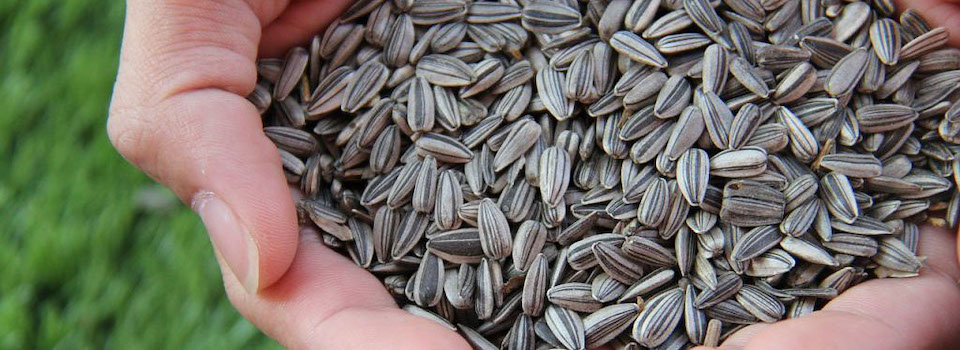
To enhance the eating experience, K-State horticulture expert Cynthia Domenghini says people can toss sunflower seeds in melted butter and salt. | Download photo
Harvesting and roasting sunflower seeds
K-State's Domenghini shares tips for the upcoming sunflower harvest and home roasting
At a glance: K-State horticulture expert Cynthia Domenghini explains how to identify harvest-ready sunflower seeds, the gathering process and cooking methods.
More information: Cynthia Domenghini, cdom@ksu.edu
Related: Sunflower Harvesting | Sunflower Insect Pest Management | 2023 Kansas Performance Tests with Sunflower Hybrids | More Plants on the Plate, Fact Sheet
Sept. 13, 2024
K-State Research and Extension news service
MANHATTAN, Kan. – It is sunflower season in the sunflower state and harvest is just around the corner, starting mid-September into October.
As seed heads begin to ripen, protecting them from birds is essential. said Kansas State University horticulture expert Cynthia Domenghini, who recommends covering the heads once the petals begin turning brown with a paper sack or cheesecloth and securing the cover with a rubber band.
“This will not only help keep the birds out, but will prevent ripened seeds from dropping out of the head,” she said.
Maturity is indicated by shriveled florets in the center of the flower disk, the backside of the head turning a lemon-yellow color and heads facing down. “The ultimate check is to pull a few seeds to see if they have turned black with white stripes, the typical color,” Domenghini said.
If there are empty shells, this usually indicates a lack of pollination earlier in the year, she added.
To harvest the seeds, cut the heads and place them in a paper sack, or leave a foot of stem attached and hang the heads upside down to dry. Cover the heads to prevent seeds from dropping as they dry. Once the heads dry, seeds can be removed by rubbing gently.
Roasting
Prepare the seeds for roasting by removing the shell and covering with salted water (2 quarts of water to ¼ to 2 cups salt). Then, bring them to a boil and simmer for two hours, or soak in the salt solution overnight. Then, it is important to drain and dry the seeds on absorbent paper.
To roast the seeds, spread them in a shallow pan in a 300 degree Fahrenheit oven for 30-40 minutes, stirring occasionally. Remove the seeds from the oven when they appear golden brown, according to Domenghini.
Seeds can be tossed in melted butter and salted, if desired.
Domenghini and her colleagues in K-State’s Department of Horticulture and Natural Resources produce a weekly Horticulture Newsletter with tips for maintaining home landscapes and gardens.
Interested persons can subscribe to the newsletter, as well as send their garden and yard-related questions to Domenghini at cdom@ksu.edu, or contact your local K-State Research and Extension office.
***

K‑State Research and Extension is a short name for the Kansas State University Agricultural Experiment Station and Cooperative Extension Service, a program designed to generate and distribute useful knowledge for the well‑being of Kansans. Supported by county, state, federal and private funds, the program has county extension offices, experiment fields, area extension offices and regional research centers statewide. Its headquarters is on the K‑State campus in Manhattan. For more information, visit www.ksre.ksu.edu. K-State Research and Extension is an equal opportunity provider and employer.