Selecting the Right Bull: A guide to maximizing genetic and economic success
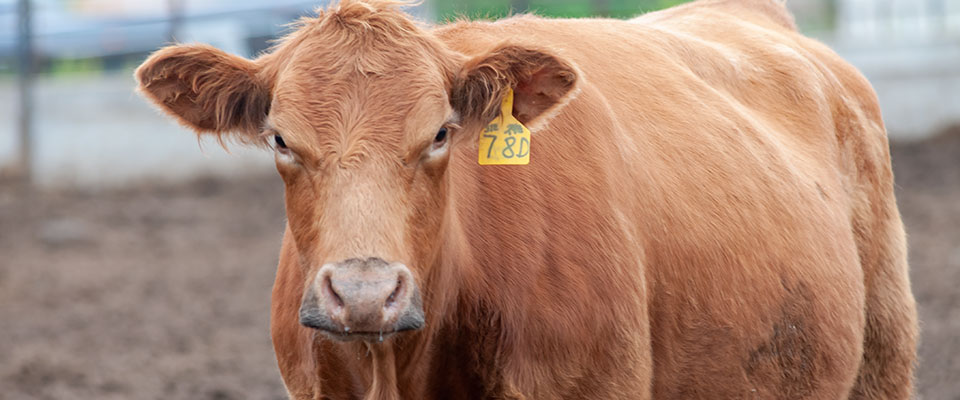
Selecting the right bull is one of the most important decisions a cattle producer can make.
K-State beef cattle expert outlines key factors in selecting bulls for fertility, performance and profitability
At a glance: Emma Briggs, a beef cattle systems specialist at K-State’s Western Kansas Research-Extension Center in Hays, said selecting the right bull is one of the most important decisions a cattle producer can make.
More information: Emma Briggs, aebriggs@ksu.edu
Related: Western Kansas Research-Extension Centers | Why Aren't My Cows Pregnant | Cow-Calf Record Book
March 20, 2025
K-State Research and Extension news service
HAYS, Kan. – A Kansas State University beef cattle expert is urging the state’s producers to consider key factors in selecting bulls for their operation, saying that “thoughtful bull selection sets the foundation for healthier cows, higher-quality calves, and greater overall herd performance.”
Emma Briggs, a beef cattle systems specialist at K-State’s Western Kansas Research-Extension Center in Hays, said selecting the right bull is one of the most important decisions a cattle producer can make, impacting everything from fertility and growth to overall herd profitability.
She notes that a well-chosen bull drives genetic progress, influencing traits such as feed efficiency, carcass quality, and maternal ability.
"Establishing clear breeding and marketing goals is the first step," Briggs said. "Knowing whether you’re keeping replacement heifers or marketing all calves at weaning helps define the traits you should focus on."
Genetic tools like Expected Progeny Differences (EPDs) provide valuable insight when selecting a bull, but not all EPDs hold equal importance.
"If you’re keeping replacement females, you’ll want to prioritize maternal traits like calving ease and milk production," Briggs said. "If your focus is the feedlot, then growth and carcass traits will be more relevant."
Briggs added that selecting bulls based on the most economically significant EPDs allows producers to make strategic decisions that improve long-term herd performance.
“While genetics play a key role, physical soundness cannot be overlooked,” she said. “EPDs predict genetic potential, but they don’t guarantee that a bull will hold up structurally.”
Structural integrity affects longevity and breeding efficiency, while muscle and frame size influence calf value. Bulls with poor conformation can lead to discounts at market, making a visual evaluation just as critical as genetic selection.
Briggs said crossbreeding remains one of the most effective tools for improving herd performance.
"One of the biggest benefits of crossbreeding is the longevity and fertility advantages in crossbred cows," she said, adding that hybrid vigor improves maternal traits, enhances weaning weights, and extends productive lifespans.
Breed complementarity also plays a role. According to Briggs, British breeds offer carcass quality and fleshing ability, while Continental breeds contribute superior growth and lean yield. A well-planned crossbreeding strategy balances these traits to create efficient, high-performing cattle, she said.
“Bulls are the fastest way to make genetic progress in a herd, making careful selection an investment in both short-term profitability and long-term sustainability,” Briggs said. “By using EPDs strategically, evaluating phenotype critically, and incorporating crossbreeding where applicable, producers can build a more productive and efficient herd.
***

K‑State Research and Extension is a short name for the Kansas State University Agricultural Experiment Station and Cooperative Extension Service, a program designed to generate and distribute useful knowledge for the well‑being of Kansans. Supported by county, state, federal and private funds, the program has county extension offices, experiment fields, area extension offices and regional research centers statewide. Its headquarters is on the K‑State campus in Manhattan. For more information, visit www.ksre.ksu.edu. K-State Research and Extension is an equal opportunity provider and employer.