Chiggers in Kansas: K-State entomologist shares tips to avoid the itch
Scratching could promote a secondary infection, Cloyd says
At a glance: Warmer days may lead many to itch for spring and summer, but a Kansas State University entomologist cautions against a small mite that is likely to give you a less-pleasing seasonal itch.
More information: Raymond Cloyd, 785-532-4750, rcloyd@ksu.edu
Related: Chiggers in Kansas
March 24, 2025
By Pat Melgares, K-State Research and Extension news service
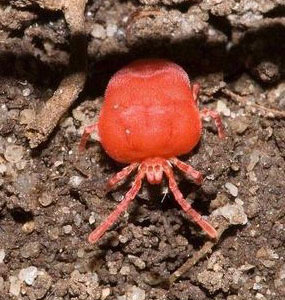 MANHATTAN, Kan. – Warmer days may lead many to itch for spring and summer, but a Kansas State University entomologist cautions against a small mite that is likely to give you a less-pleasing seasonal itch.
At right: Adult chigger
Chiggers are active beginning in April, says K-State’s Raymond Cloyd, and are usually found in areas with unmanaged vegetation, as well as parks, golf courses, sports fields and other grassy areas. The larvae attach themselves to humans, pets and other animals.
“Chiggers do not suck blood,” Cloyd said. “Rather, chiggers burrow and feed on dissolved skin. The larvae inject a saliva that causes the skin tissue to dissolve, and that is what the chigger larvae feed on.”
According to Cloyd, the larvae are difficult to see with the human eye. Humans often notice the presence of chiggers by a reddish-rash and itchy skin.
Cloyd cautions humans to resist the urge to scratch.
“You want to avoid scratching too often because you can promote a bacterial infection by opening wounds,” he said. “I’ve been bitten by chiggers many times, and I know it’s very tempting to scratch, but you don’t want to create a bigger problem.”
Cloyd said some topical ointments may help with the itch and a dermatologist may be able to provide recommendations.
Once attached, larvae feed for “a few days,” according to Cloyd, and then they fall off the host. The larvae become nymphs and then adults that reside in the soil. The nymphs and adults do not feed on humans or other animals. Instead, they feed on insects, mites, and their eggs in the soil.
The best advice, according to Cloyd, is to avoid getting bit in the first place.
“If you’re going to go into an area where chiggers are likely to be, use DEET or other repellants, and then when you come back inside, immediately take a shower to help reduce the itchiness caused by chiggers,” he said.
Chiggers are usually active from Spring (late April) until Fall, or until the first frost. The species of chiggers found in Kansas do not transmit disease, Cloyd said.
Cloyd has written a publication, titled Chiggers in Kansas, with additional tips for protecting yourself from chiggers, including:
- Avoid walking into areas with tall grass and weeds.
- Do not sit, lie down or walk barefoot in areas that may harbor chiggers.
- Insert pant legs underneath socks.
- Mow turfgrass regularly and remove extensive vegetation, such as brush, shrubs, grass and weeds).
- Wash clothes using a hot water wash and rinse to kills chiggers that may be attached to clothing.
- Consult a physician about products that can be used to relieve discomfort and itching.
More information is available at local extension offices in Kansas.
***

K‑State Research and Extension is a short name for the Kansas State University Agricultural Experiment Station and Cooperative Extension Service, a program designed to generate and distribute useful knowledge for the well‑being of Kansans. Supported by county, state, federal and private funds, the program has county extension offices, experiment fields, area extension offices and regional research centers statewide. Its headquarters is on the K‑State campus in Manhattan. For more information, visit www.ksre.ksu.edu. K-State Research and Extension is an equal opportunity provider and employer.