Economists project ‘sizeable increase’ in 2025 Kansas farm income
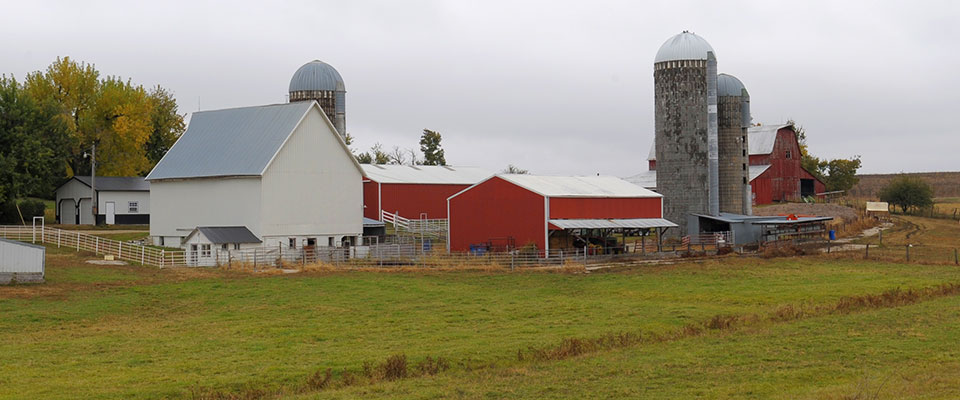
K-State economists and the Rural and Farm Finance Policy Analysis Center at the University of Missouri project a $2.6 billion increase in total Kansas farm income in 2025.
Income uptick helped by government payments, assumption that yields return to normal
At a glance: A Kansas State University agricultural economist predicts “a sizeable increase” in Kansas farm income this year, spurred by one-time government payments meant to blunt the effects of recent economic- and disaster-related losses.
More information: Jenny Ifft, jifft@ksu.edu
Related: AgManager.info | Rural and Farm Finance Policy Analysis Center | Webinar: Kansas Farm Income | Agriculture Today
May 27, 2025
By Pat Melgares, K-State Research and Extension news service
MANHATTAN, Kan. – A Kansas State University agricultural economist predicts “a sizeable increase” in Kansas farm income this year, spurred by one-time government payments meant to blunt the effects of recent economic- and disaster-related losses.
Jenny Ifft, K-State’s Flinchbaugh Agricultural Policy Chair in the university’s Department of Agricultural Economics, projects 2025 Kansas net farm income to be at $7.74 billion, well ahead of the estimated $4.14 billion recorded in 2024.
The farm income outlook is produced by K-State in partnership with the Rural and Farm Finance Policy Analysis Center at the University of Missouri, known as RAFF.
Ad hoc government payments – approved last year by Congress but distributed in 2025 – will total nearly $2 billion. Kansas crop farms are now eligible for economic assistance payments. Disaster payments will be determined later this year.
“All across Kansas, and even within some counties, you’re going to see variance in 2025 financial performance,” Ifft said. “After a couple of years with depressed prices and higher expenses, crop farms may have to use the government payments — along with this year’s profits — to catch up. Even with the direct payments, some farms may not fully recover the losses from recent years.”
The 2025 farm income projection does include an improvement in crop cash receipts.
“Across the board,” Ifft said, “crop receipts are expected to go up a little bit, mainly because our forecasts assume a return to normal or average yields.”
In contrast with the crop sector, strong markets benefit livestock producers. In 2025, livestock production will make up 64% of cash receipts in Kansas agriculture. “So,” Ifft said, “this sector is a big, big part of the year’s farm income story.”
Of the 64%, she notes that 89% of that comes from cattle and calves.
“We do have lower cattle and calves inventory this year, but we also have continued strong prices,” Ifft said. “So for livestock, we do expect cash receipts to go up in 2025.”
Another bright spot for Kansas farmers: Ifft says prices are coming down for farm inputs such as feed, fertilizer, pesticides and fuel.
“Labor costs are going up, but I don’t think that is surprising,” Ifft said. “The net effect is that overall, we may be seeing some relief.”
Looking ahead to 2026, the outlook projects Kansas net farm income to decline to $5.84 billion — a 24% decrease relative to 2025.
“Positive profit margins in livestock production and one-time government payments will support farm liquidity in calendar year 2025,” said Alejandro Plastina, RaFF director. “Managing liquidity smartly will be key to protect farm operations from headwinds in 2026.”
At noon on June 17, join a K-State Department of Agricultural Economics webinar for more Kansas farm income discussion. You can register for the webinar today. Find the Kansas farm income outlook report available online from RAFF.
Ifft talked at length about farm income on the May 19 edition of Agriculture Today, a weekday podcast produced by K-State Research and Extension.
***

K‑State Research and Extension is a short name for the Kansas State University Agricultural Experiment Station and Cooperative Extension Service, a program designed to generate and distribute useful knowledge for the well‑being of Kansans. Supported by county, state, federal and private funds, the program has county extension offices, experiment fields, area extension offices and regional research centers statewide. Its headquarters is on the K‑State campus in Manhattan. For more information, visit www.ksre.ksu.edu. K-State Research and Extension is an equal opportunity provider and employer.