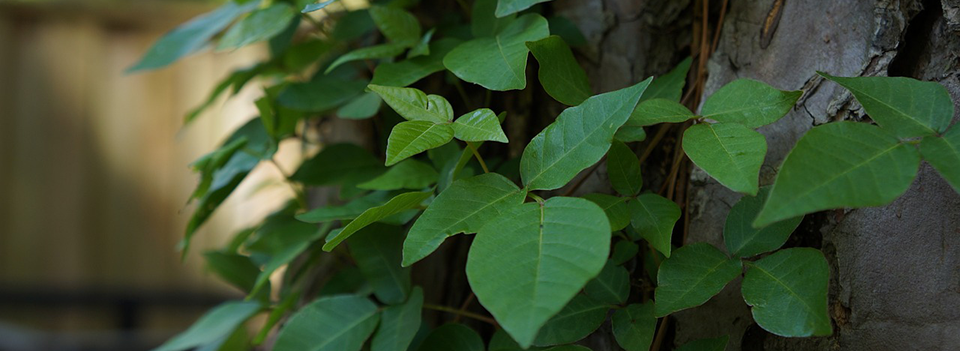
Identifying poison ivy is important
K-State horticulture expert says poison ivy grows in various forms
At a glance: Growing in various forms and locations, poison ivy can be found in the home garden. K-State horticulture expert Cynthia Domenghini says knowing what to look for can help you avoid an itchy confrontation.
More information: Cynthia Domenghini, Cdom@ksu.edu
Related: K-State Horticulture Newsletter
May 8, 2025
K-State Research and Extension news service
MANHATTAN, Kan. — Most people accept that avoiding poison ivy is good advice, but Kansas State University horticulture expert Cynthia Domenghini said doing so starts with correctly identifying the allergenic plant.
Domenghini said poison ivy grows in multiple forms with varying leaf appearances. Three varieties of poison ivy include erect woody shrub, climbing woody vine and groundcover.
“In the vining habit, aerial roots give the vines a fuzzy, rope-like appearance. As a groundcover, poison ivy is often confused with Virginia creeper or Woodbine,” Domenghini said. “Poison ivy shrubs can appear in fields, pastures, woods or even the home garden.”
Domenghini describes the many leaf margins as toothed, incised, lobed or smooth, but notes that poison ivy typically appears with leaves in groups of three.
“The leaf size can vary, but the middle leaflet is the only one with a long stalk and is larger than the other two. The other two leaves are closely attached to the petiole (leaf stem),” Domenghini said.
When removing poison ivy plants, Domenghini recommends wearing pants, long sleeves and gloves, and washing clothing and skin to remove traces of plant toxins when complete.
“In the groundcover form, direct spray or grubbing (digging) are common strategies for removal. Make sure the soil is moist before grubbing out the plants, including the root systems,” Domenghini said.
Herbicides may also be used on the shrub form of poison ivy.
“Direct spray is a common control method. For woody vines of poison ivy, cut the plant off at the base and treat the emerging sprouts with herbicide when they appear,” Domenghini said.
Domenghini and her colleagues in K-State’s Department of Horticulture and Natural Resources produce a weekly Horticulture Newsletter with tips for maintaining home landscapes and gardens.
Interested persons can subscribe to the newsletter, as well as send their garden and yard-related questions to hortsupport@ksu.edu, or contact your local K-State Research and Extension office.
***

K‑State Research and Extension is a short name for the Kansas State University Agricultural Experiment Station and Cooperative Extension Service, a program designed to generate and distribute useful knowledge for the well‑being of Kansans. Supported by county, state, federal and private funds, the program has county extension offices, experiment fields, area extension offices and regional research centers statewide. Its headquarters is on the K‑State campus in Manhattan. For more information, visit www.ksre.ksu.edu. K-State Research and Extension is an equal opportunity provider and employer.