K-State study reveals insights into ground beef spoilage
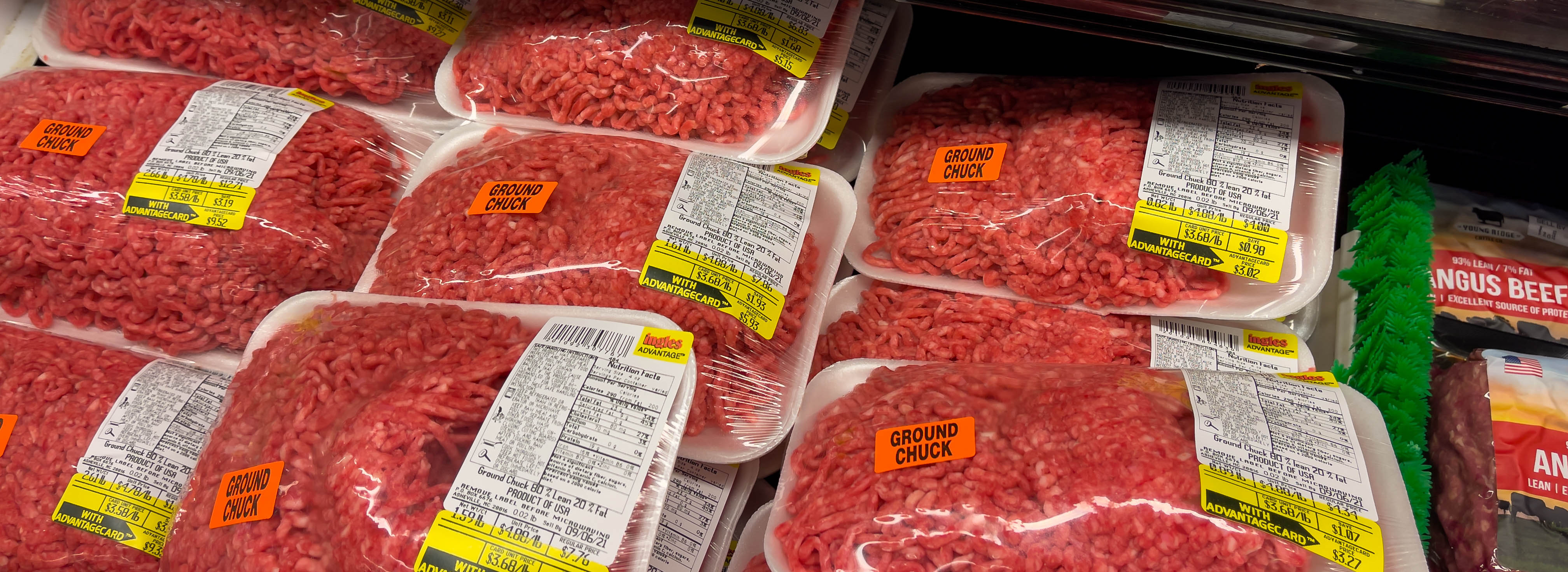
K-State study finds ground beef color isn't always an indication of whether that meet is spoiled or not.
K-State research challenges long-standing threshold used to determine meat spoilage
At a glance: Kansas State University meat scientist Travis O’Quinn and his research team have uncovered surprising results that challenge consumer’s long-held beliefs on what qualifies as ‘spoiled’ ground beef.
More information: Travis O'Quinn, 785-532-3469
Related: K-State Meat Science and Food Safety | Food Safety Expert: Color not always indicator of safe ground beef
July 14, 2025
By Madeline Drake, K-State Research and Extension news service
MANHATTAN, Kan. — Kansas State University meat scientist Travis O’Quinn and his research team have uncovered surprising results that challenge consumer’s long-held beliefs on what qualifies as ‘spoiled’ ground beef.
Many people have sensory cues on what would cause them to throw a product away, including brown bananas, odor in milk, and slimy deli meats.
“Within meat products, (spoilage) has been intimately tied with bacterial growth, a belief that if we reach a magical level of bacterial growth that the product is spoiled,” O'Quinn said. “When we look back at the literature, it is pretty shaky on where that idea of a certain bacteria level came from.”
With this information in mind, O’Quinn and his research team set out to learn more about what factors lead to considering ground beef to be spoiled.”
In their study, retail ground beef packages were stored in a display case for 14 days. Throughout the display time, researchers asked a consumer panel if they would purchase the sample and whether or not they considered the sample spoiled.
While visually the ground beef followed the spoilage pattern that researchers thought it would -- that is, it turned brown after 4-6 days -- other traits told a different story.
“The challenge was when we looked at the other traits (related to spoilage), we didn’t really fail, ever,” O’Quinn said. “You would think that the meat would start smelling bad or tasting bad, but even at the very end of the trial we a had low percentage of our samples that tasted bad to consumers.”
In other words, O’Quinn said, the meat may look spoiled, but color is not a true determinant of a spoiled food product.
“Some of the key takeaways from this study is the idea that using microorganism growth or bacteria growth to reflect spoilage is not really as closely tied together as we have previously thought,” he said.
The findings may have implications in grocery stores and other retail settings where consumers are making purchasing decisions based on such factors as appearance, color and discoloration traits. O'Quinn said that efforts to prevent spoilage in ground beef should focus on limiting and reducing color changes, since color changes in the first 4-6 days isn’t a true indicator that the product is spoiled.
“There are obviously next steps for us to continue to investigate, but this idea that bacterial growth alone drives spoilage of ground beef is not what our study showed.”
***

K‑State Research and Extension is a short name for the Kansas State University Agricultural Experiment Station and Cooperative Extension Service, a program designed to generate and distribute useful knowledge for the well‑being of Kansans. Supported by county, state, federal and private funds, the program has county extension offices, experiment fields, area extension offices and regional research centers statewide. Its headquarters is on the K‑State campus in Manhattan. For more information, visit www.ksre.ksu.edu. K-State Research and Extension is an equal opportunity provider and employer.