Drought-stricken Kansas farmers likely to see ARC payments for 2024 crop; PLC largely out of reach
K-State agricultural economists forecast commodity program payments
At a glance: Kansas farmers hardest hit by last year's drought conditions are likely to receive support this year through the Agricultural Risk Coverage commodity program.
More information:
Robin Reid, 785-532-0964, robinreid@ksu.edu
Rich Llewelyn, rvl@ksu.edu
Related: ARC-County payment maps (Kansas) | AgManager.info |
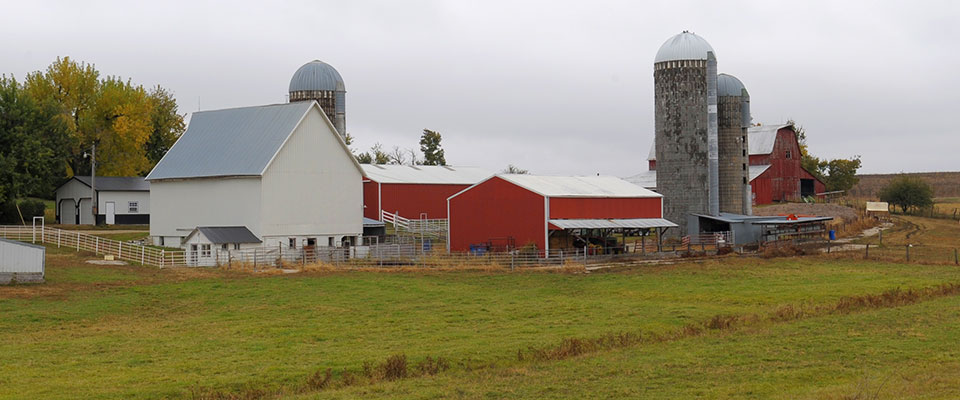
Many Kansas farmers will receive support this fall through the Agricultural Risk Coverage program, for crops harvested in 2024.
July 15, 2025
By Pat Melgares, K-State Extension news service
MANHATTAN, Kan. — While Kansas farmers won’t see much relief from Price Loss Coverage (PLC) this year, many will receive support through Agricultural Risk Coverage (ARC), particularly those hit hardest by last year’s drought conditions, according to Kansas State University agricultural economists.
K-State Extension farm economist Robin Reid and extension assistant Rich Llewelyn said the federal safety net programs for row crop producers who elected ARC in 2024 could benefit from payments this fall. With payments tied to the 2024 crop year but not disbursed until October 2025, the pair shared a detailed breakdown of what growers can expect across the state.
Listen to an interview by Shelby Varner with Robin Reid and Rich Llewelyn on the weekday radio program, Agriculture Today
PLC is a commodity program through the Farm Bill that provides payments when market-year average prices for a covered commodity falls below its effective reference price. ARC is the other commodity program that provides payments when the actual revenue for the county is less than a guarantee set, based on historical data and market conditions.
The programs aim to protect farmers from significant income losses due to fluctuations in crop prices or revenue shortfalls.
“Wheat prices have been finalized, and the national average came in above the reference price,” Llewelyn said. “That means no PLC payments for wheat, and it’s unlikely we’ll see any for corn or soybeans either.”
While the 2024-25 marketing year for corn, soybeans, and grain sorghum still has a couple of months left, current projections show those prices also holding above reference levels, he added.
Llewelyn said current prices for grain sorghum are hovering just four cents above the reference price, meaning a small PLC payment is still possible if market conditions shift downward before the marketing year closes.
However, Reid said the ARC-County program is expected to bring significant payments to many Kansas producers, due to depressed yields during the 2024 crop year.
“ARC has a county yield component,” Reid said. “And because we saw substantial yield losses across much of the state in 2024 — especially in non-irrigated corn, grain sorghum, wheat and soybeans — there will be a notable number of counties receiving payments.”
The U.S. Department of Agriculture has already finalized the ARC-County wheat payments, which show the eastern third of Kansas won’t receive assistance due to stronger yields. However, central and western regions tell a different story, according to Reid.
“In counties like Osborne, Ellis, and Russell, producers can expect ARC wheat payments of about $30 per base acre, paid on 85% of a producer’s wheat base,” she said.
Reid notes that non-irrigated corn payments are widespread, with estimates ranging from $25 per acre in parts of western Kansas to $70 per acre in Republic County. Irrigated corn payments will also be issued in some areas — with Marshall County projected at $110 per acre, and Saline County around $44.
Soybeans, too, saw drought impacts that triggered payments under ARC-County. Much of southeast Kansas is expected to qualify, along with central counties like Ellis and Lincoln. However, northeastern counties will see little to no soybean ARC assistance.
Reid emphasized the importance of understanding how irrigation designations affect payments.
“Some counties have separate benchmarks for irrigated and non-irrigated crops, depending on the historical acreage,” she said. “It’s critical to know your farm’s base acres and historical irrigation percentage (HIP) to understand what your actual farm payments will be. Consult your (Farm Service Agency) paperwork for this information.”
Looking ahead: Bigger payments in 2026?
Farmers can also look forward to improved program support thanks to provisions included in recent federal legislation.
“ARC and PLC are both enhanced under the new bill passed in Congress,” Reid said. “We’ll see higher reference prices and likely higher payment rates, but those changes won’t take effect until the 2025 crop, with payments not coming until October 2026.”
One bright spot: For the 2025 crop year, farmers choice between ARC and PLC made last spring will not matter. Instead, they'll automatically receive the higher of the two payments — a one-time benefit before annual elections return in 2026.
For now, Reid encourages producers to explore detailed, county-level payment estimates available at AgManager.info under the ag policy section.
“This is where you’ll find maps showing where payments are occurring and how they break down by crop and irrigation type,” she said. “It’s a valuable tool as producers are monitoring and planning for their cash flow.”
***

K‑State Research and Extension is a short name for the Kansas State University Agricultural Experiment Station and Cooperative Extension Service, a program designed to generate and distribute useful knowledge for the well‑being of Kansans. Supported by county, state, federal and private funds, the program has county extension offices, experiment fields, area extension offices and regional research centers statewide. Its headquarters is on the K‑State campus in Manhattan. For more information, visit www.ksre.ksu.edu. K-State Research and Extension is an equal opportunity provider and employer.