Cattle Chat: Data driven decisions to improve herd performance
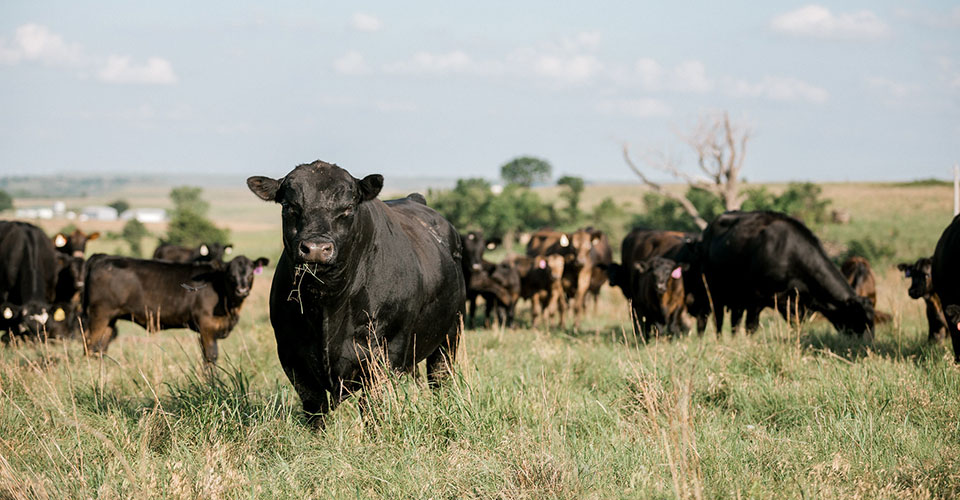
Maintaining accurate records is an important component of any beef cattle operation. | Download photo
K-State beef cattle experts advocate for data as a valuable decision-making tool
At a glance: K-State beef cattle experts say recording cattle performance is important for any beef cattle operation, but the type of data collected will vary depending on the marketing goals for the herd.
Bob Larson, 785-532-4257, rlarson@vet.k-state.edu
Dustin Pendell, 785-532-3525, dpendell@ksu.edu
Brad White, 785-532-4243, bwhite@vet.k-state.edu
Related: Beef Cattle Institute Cattle Chat
July 22, 2025
By Chevy-Lynn Vaske, K-State Research and Extension news service
MANHATTAN, Kan. — Like a coach studying game statistics to unlock a team’s potential, it’s equally important for cattle producers to track herd data to make informed breeding, feeding and marketing decisions.
Understanding what data matters most can be overwhelming. That’s why Kansas State University’s Beef Cattle Institute veterinarians Brad White and Bob Larson, along with agricultural economist Dustin Pendell – shared insights on setting data priorities for beef operations in a recent episode of Cattle Chat.
Although every operation is different, there are a few core metrics that are universally important. “These include pregnancy percentage, weaning weights, death loss percentage and sickness rate,” Larson said.
Tracking these numbers annually helps producers evaluate progress and catch potential issues early, he added.
“It’s really important to monitor whether we’re improving the herd, or if we’re already doing well, in order to maintain that success, and look for areas where problems may be creeping in before we fully recognize them,” Larson said.
White emphasized the connection between production data and rising input costs.
“Maintaining balance between expenses and performance is a challenge, especially as production costs continue to climb,” White said. “You can’t always target both decreasing expenses and increasing production.”
The experts agreed that the producer’s goals will influence what numbers matter most, but all producers need to be aware of the relationship between cost and return.
“You should always manage your expenses, but you also have to pay attention to the market conditions,” Pendell said. “Are they at record highs? What is the cost of putting on additional weight, and how does that compare to the price you'll receive?”
Once a cattle operation reaches a profitable level, making further improvements requires closer attention to detail, said Larson.
“At that point, you really have to sharpen your pencil and weigh the cost-benefit of every input,” Larson said. “Some expenses don’t offer much return, while others — like nutritional inputs — can make a significant difference in maintaining body condition.”
Larson noted that if cows maintain consistent body condition year-round, additional feed may not be necessary. Tracking core data points — such as pregnancy rate, weaning weights, death loss and sickness — can help identify where changes are needed or confirm what’s working.
“These numbers help you monitor progress and catch potential problems early,” he said.
White added that as production stabilizes, cost-efficiency becomes harder to achieve —especially with today’s higher input costs.
With rising input costs and more complex decisions at higher production levels, K-State veterinarians and economists alike point to data tracking and cost analysis as useful tools for evaluating herd performance and input value.
To hear the full discussion about record keeping and advice on consumer demand, listen to the BCI Cattle Chat podcast online.
***

K‑State Research and Extension is a short name for the Kansas State University Agricultural Experiment Station and Cooperative Extension Service, a program designed to generate and distribute useful knowledge for the well‑being of Kansans. Supported by county, state, federal and private funds, the program has county extension offices, experiment fields, area extension offices and regional research centers statewide. Its headquarters is on the K‑State campus in Manhattan. For more information, visit www.ksre.ksu.edu. K-State Research and Extension is an equal opportunity provider and employer.