Cattle Chat: Overeating disease in calves
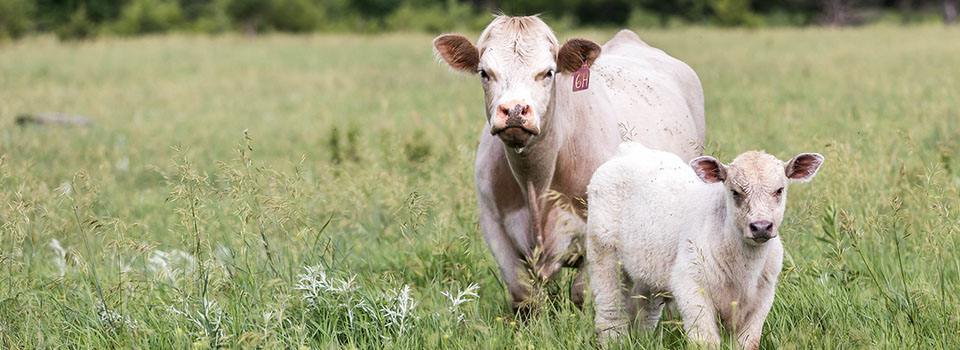
Calves out on summer pastures with their mothers are at risk of experiencing overeating disease, say the K-State veterinarians. | Download photo
K-State beef cattle veterinarian Bob Larson explains how this disease can lead to calf death
At a glance: K-State veterinarian Bob Larson explains how young calves develop overeating disease and outlines a management strategy that lessens the risk of this illness.
More information: Bob Larson, 785-532-4257, rlarson@vet.k-state.edu
Related: Beef Cattle Institute Cattle Chat
July 15, 2025
By Lisa Moser, K-State Research and Extension news service
MANHATTAN, Kan. – Many cattle producers would agree that summer is one of the most enjoyable seasons of the year as they watch calves run alongside their mothers grazing on lush, green pastures. However, on a rare occasion, that idyllic scene takes a dark turn when they find what they thought was a healthy calf lying dead in the pasture.
This was the topic of discussion on a recent Cattle Chat podcast hosted by experts at the Kansas State University Beef Cattle Institute.
“When young calves experience a sudden death on a summer pasture, overeating disease is one of the first illnesses that veterinarians suspect is the cause,” K-State veterinarian Bob Larson said. “This disease is caused by (the bacterium) Clostridium perfringens.”
He said it is called overeating disease, also known as enterotoxemia, because it is often associated with calves that eat well. Oftentimes, they are some of the highest-performing calves in the herd.
“The calf whose dam is a high-milking female is at a little greater risk of this disease because of the rapidly fermentable carbohydrates it is consuming,” Larson said. “That overgrowth produces toxins in the calf’s intestine that can cause it to suddenly die.”
If a producer finds a calf not thriving in the pasture, signs of this disease include one that is lying down and appears uncomfortable. Larson said that treatment may not be successful, but early intervention is necessary to prevent death.
He said the disease is hard to prevent because the bacteria is very common and resides, in the soil.
“Most cattle have these organisms in their digestive tract all the time; the problem for a 2–3-month-old calf comes when there is bacterial overgrowth and excessive toxin production in its gut,” Larson said.
While it doesn’t completely prevent the disease, Larson said giving calves a seven-way clostridial vaccination at 2-3 months of age can lessen the risk.
“I typically recommend producers give this vaccination when they are processing the spring-born calves at pasture turnout,” Larson said. “The vaccination should provide some immunity benefit, but we still do see cases of this disease in a well-vaccinated herd.”
To hear the full discussion, listen to Cattle Chat on your preferred streaming platform.
***

K‑State Research and Extension is a short name for the Kansas State University Agricultural Experiment Station and Cooperative Extension Service, a program designed to generate and distribute useful knowledge for the well‑being of Kansans. Supported by county, state, federal and private funds, the program has county extension offices, experiment fields, area extension offices and regional research centers statewide. Its headquarters is on the K‑State campus in Manhattan. For more information, visit www.ksre.ksu.edu. K-State Research and Extension is an equal opportunity provider and employer.