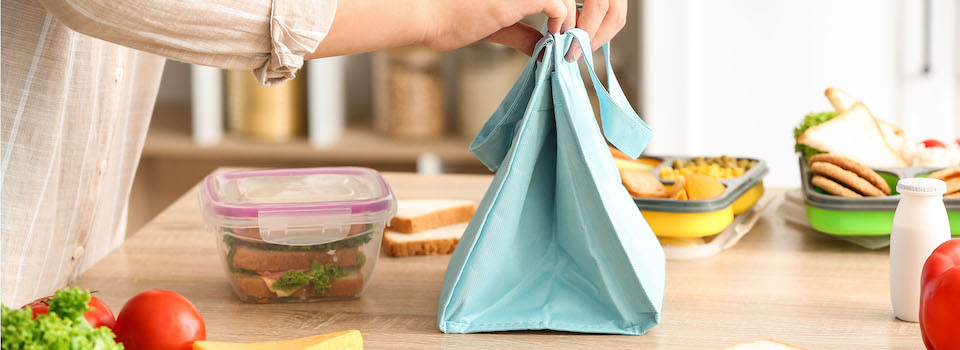
Giving children the ability to pick what they want to pack for lunch gives them an incentive to eat and finish their meals, said K-State food scientist Karen Blakeslee.
Back to School: Focus lunch prep on food safety, kid-friendly choices
K-State food scientist shares tips for packing a safe lunchbox
At a glance: With summer break wrapping up and children heading back to school, K-State food scientist Karen Blakeslee shares some general information about safely packing a healthy lunch for students.
More information: Karen Blakeslee, 785-532-1673, kblakesl@ksu.edu
Related: Rapid Response Center for food science | At-Home Safe Food Handling: It's in Your Hands | Safe Food Storage: The Refrigerator and Freezer | The Food Safety Zone
By Pat Melgares, K-State Extension news service
MANHATTAN, Kan. -- As the back-to-school season kicks into high gear, a Kansas State University food safety expert is encouraging parents to think beyond notebooks and pencils and focus on another classroom essential: the lunchbox.
Whether it’s a soft-sided tote or a hard plastic shell, today’s insulated lunch bags offer more than nostalgia. K-State food scientist Karen Blakeslee says they’re part of a larger strategy to keep kids healthy and energized throughout the school day.
“Food safety is a key factor,” said Blakeslee, who also is coordinator of K-State’s Rapid Response Center for food science. “Always aim to keep cold foods cold, hot foods hot, and avoid cross-contamination, especially if your child or another has food allergies.”
Listen to an interview by Jeff Wichman with Karen Blakeslee on the weekly radio podcast, Sound Living
Insulated lunch bags, paired with appropriately sized ice packs, help prevent perishable items like meat, cheese, and yogurt from spoiling before lunchtime. The size of the ice pack matters. Blakeslee says if it’s too large, it crowds out the food; too small, and it won’t keep items cold long enough.
Many schools may not provide refrigeration for packed lunches, so parents should check policies ahead of time. Experts also recommend knowing when your child will eat lunch to help gauge how long food will sit unrefrigerated.
Beyond safety, lunchtime planning is also about efficiency and nutrition, according to Blakeslee.
“Make it easy to eat,” she said. “Know how much time your child has for lunch, and involve them in selecting or packing the food. They’re more likely to eat it that way. This can also reduce leftovers or food waste.”
Pre-packaged snacks like fruit cups, yogurt tubes, and snack bars can be convenient, but families can also make their own meal kits using small containers with compartments to separate meats, cheeses, and crackers — often at a lower cost.
And while reusable containers and resealable bags help reduce waste, they should also be easy for young children to open without assistance. Blakeslee suggests including utensils and napkins if sending peeled fruit or cut vegetables; even a small wet wipe can help kids clean up quickly.
Planning ahead — even prepping some items the night before — can ease hectic mornings. But soggy sandwiches are a real concern. Blakeslee suggests preparing items like peanut butter sandwiches ahead of time, while leaving moisture-prone options like deli meat or tomatoes for morning assembly.
Parents should also aim to build a balanced lunch that includes protein, grains, fruits, and vegetables. Cheese, yogurt, pretzels, or low-sugar snack bars are all kid-friendly options, while 100% juice boxes or frozen yogurt tubes can double as cold packs until lunchtime.
And, Blakeslee says, don’t fret too much about mayonnaise: “Mayonnaise has long been blamed for food poisoning, but the real culprits in dishes like potato salad are the eggs, potatoes, or meat — not the mayo, which is actually quite acidic.”
Blakeslee also suggests buying a backup lunchbox; kids often forget to bring the primary lunchbox home.
“Get the lunchbox, get the ice packs, and stock up your cabinets now with packaged foods that are shelf-stable,” she said. “And always remember the core food safety principles: wash your hands; keep cold foods cold and hot foods hot; and keep raw foods separate from ready-to-eat items.”
More information on food safety is available in a pair of publications available from the K-State Extension bookstore: At-Home Safe Food Handling: It’s in Your Hands, and Safe Food Storage, or visit the K-State Extension local office in your county or region.
***

K‑State Research and Extension is a short name for the Kansas State University Agricultural Experiment Station and Cooperative Extension Service, a program designed to generate and distribute useful knowledge for the well‑being of Kansans. Supported by county, state, federal and private funds, the program has county extension offices, experiment fields, area extension offices and regional research centers statewide. Its headquarters is on the K‑State campus in Manhattan. For more information, visit www.ksre.ksu.edu. K-State Research and Extension is an equal opportunity provider and employer.