Raw milk poses a danger to consumers’ health, says K-State dairy specialist
The safest dairy products are those that have been through the pasteurization process
At a glance: Following recent reports across the country of individuals getting sick from raw milk, Kansas State University dairy specialist Mike Brouk encourages consumers to remember the risks associated with drinking raw milk.
More information: Mike Brouk, mbrouk@ksu.edu
Related: Agriculture Today | FDA statement on raw milk
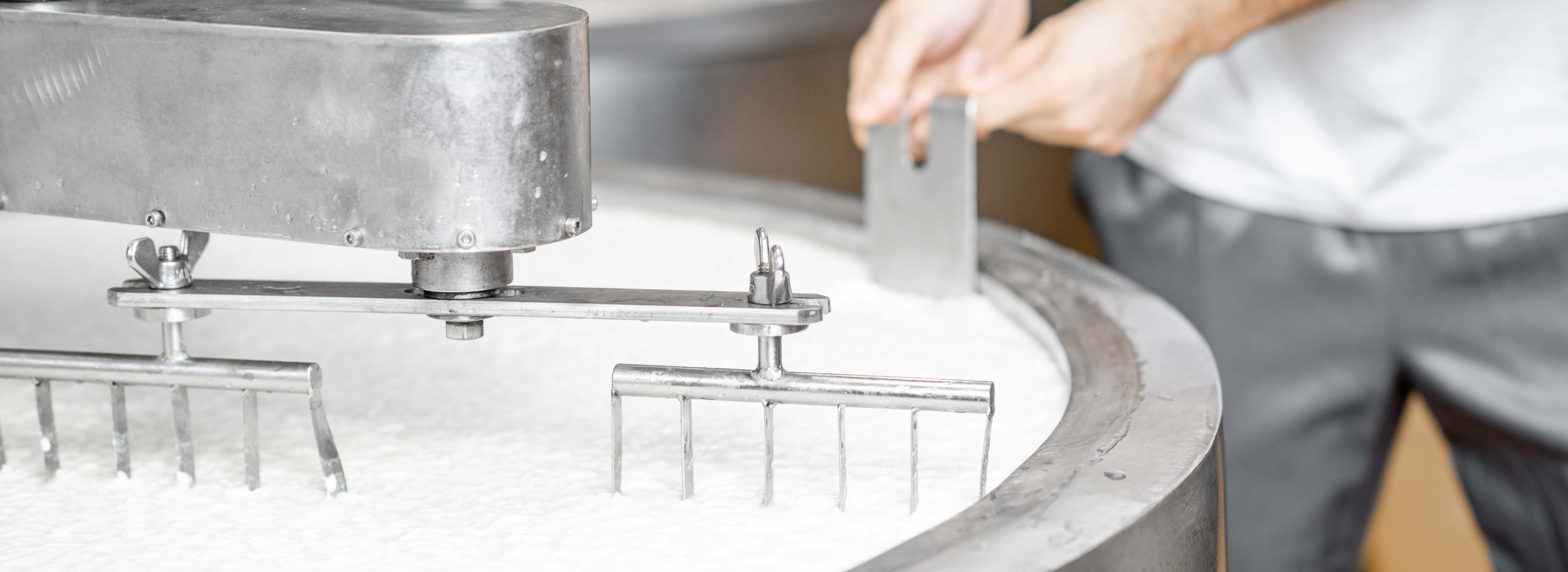
K-State dairy expert says pasteurizing milk removes bacteria that could cause disease.
Aug. 26, 2025
By Madeline Drake, K-State Extension news service
MANHATTAN, Kan. –Following recent reports across the country of individuals getting sick from raw milk, Kansas State University dairy specialist Mike Brouk encourages consumers to remember the risks associated with drinking raw milk.
“It’s not unusual each year to see reports from different places around the country where people become sick after consuming raw milk,” Brouk said. “Sometimes this can be serious when it involves young children.”
“In several cases the people who have become ill from consuming raw milk have been hospitalized from the damage caused by the endotoxins produced by bacteria found in raw milk,” he said.
Listen to the Aug. 19 Milk Lines segment featuring Mike Brouk
Brouk said that dairy products purchased in the grocery store are all manufactured from pasteurized milk. Pasteurization is a process that applies heat to destroy pathogens in food. For the dairy industry, this involves heating every particle of milk or milk product to a specific temperature for a designated time.
“In addition, these finished products are also tested to ensure that they don’t contain any traces of bacteria that might cause harm to consumers," Brouk said.
According to the U.S. Food and Drug Administration, citing numerous scientific studies, “raw milk can contain a variety of disease-causing pathogens...Pasteurization effectively kills raw milk pathogens without any significant impact on milk nutritional quality.”
Although not everyone who consumes raw milk will become ill, Brouk reminds consumers that those who are immuno-suppressed, very young, or very old, are at a much higher risk. Their bodies do not have the ability to fight off the endotoxins that are produced by bacteria found in raw milk, he said
“The bacteria we are mostly concerned about are things like E. coli, listeria, salmonella and campylobacter, which all have negative effects to human health,” Brouk said.
***

K‑State Research and Extension is a short name for the Kansas State University Agricultural Experiment Station and Cooperative Extension Service, a program designed to generate and distribute useful knowledge for the well‑being of Kansans. Supported by county, state, federal and private funds, the program has county extension offices, experiment fields, area extension offices and regional research centers statewide. Its headquarters is on the K‑State campus in Manhattan. For more information, visit www.ksre.ksu.edu. K-State Research and Extension is an equal opportunity provider and employer.