Cattle Chat: The power of breed diversity
K-State experts say a thoughtful crossbreeding plan can boost fertility, longevity and herd resilience
At a glance: K-State beef cattle experts say strategic breed diversity and careful genetic planning are key to capturing the full benefits of heterosis.
More information:
Brad White, 785-532-4243, bwhite@vet.k-state.edu
Phillip Lancaster, 785-564-7462, palancaster@vet-k-state.edu
Bob Larson, 785-532-425, rlarson@vet-k-state.edu
Todd Gunderson, 785-532-4478, tggundy@vet.k-state.edu
Related: Beef Cattle Institute Cattle Chat Podcast
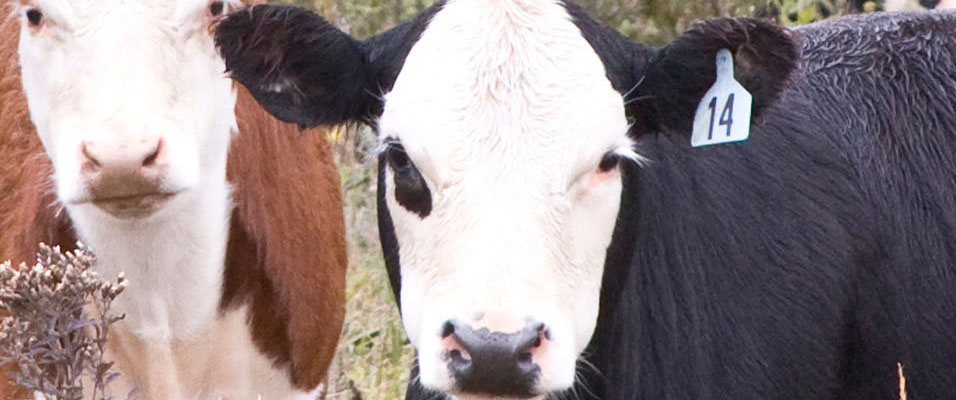
Breed diversity and careful genetic planning are key to captuing the full benefits of heterosis, according to K-State beef cattle experts. | Download photo
Sept. 30, 2025
By Chevy-Lynn Vaske, K-State Research and Extension news service
MANHATTAN, Kan. – If only breeding cattle were as simple as picking toppings at a burger bar—add a little of this, a dash of that and you’re set.
But as Kansas State University beef cattle experts reminded producers in a recent episode of the Beef Cattle Institute’s Cattle Chat podcast, crossbreeding takes more than guesswork. Done right, it can unlock the power of heterosis, also known as hybrid vigor — giving producers cows that stay in the herd longer, breed back easier and better withstand the challenges of the pasture.
“Heterosis is a good thing,” said Phillip Lancaster, a cattle nutritionist. “There are two things to keep in mind: if it gets too complicated and you backcross too much, you can lose the benefits. And it depends on which breeds you’re crossing. You get the most advantage when you cross Bos indicus with Bos taurus (cattle origins), for example.”
Lancaster cautioned that heterosis must add measurable value. “If the cross doesn’t perform as well as one of the breeds by itself, then it isn’t worth it,” he said.
Veterinarian Bob Larson emphasized the importance of breed complementarity. “It comes down to how well you can manage the plan you have for genetics,” he said.
Veterinarian Todd Gunderson added that producers should start by identifying the traits that matter most to their operation.
“The question is, what traits are most important to you, and where can you best get those?” he said.
That focus on priorities, the experts explained, connects directly to how producers approach breed diversity. Lancaster noted that while many breeds today share similar carcass goals, opportunities still exist for producers who look beyond the average.
“Most breed associations have similar end goals now,” he said. “That’s why it’s important to find individual animals that bring something different — something that helps you reach your specific operational goals.”
The discussion on breed diversity, heart disease and more is featured in the latest episode of the BCI Cattle Chat podcast.
***

K‑State Research and Extension is a short name for the Kansas State University Agricultural Experiment Station and Cooperative Extension Service, a program designed to generate and distribute useful knowledge for the well‑being of Kansans. Supported by county, state, federal and private funds, the program has county extension offices, experiment fields, area extension offices and regional research centers statewide. Its headquarters is on the K‑State campus in Manhattan. For more information, visit www.ksre.ksu.edu. K-State Research and Extension is an equal opportunity provider and employer.