Cattle Chat: Management strategies for calves
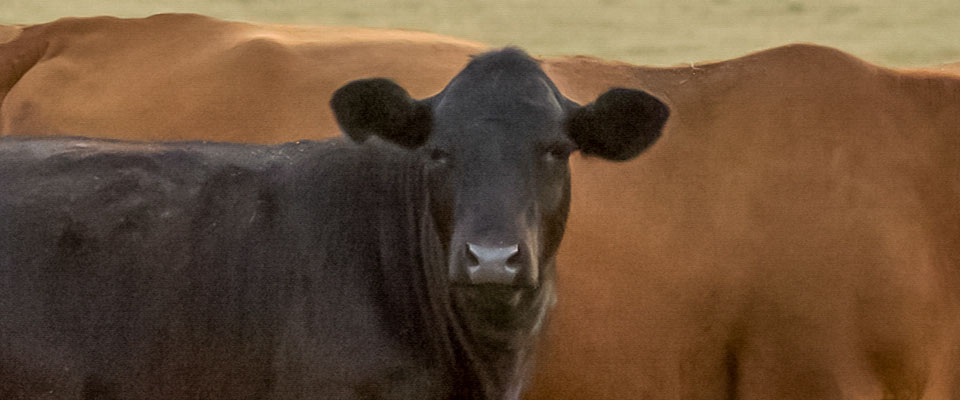
Proactive management at calving sets the stage for healthier, more profitable cattle. | Download photo
K-State beef cattle experts discuss mitigating health risks in the cattle herd
At a glance: K-State veterinarians emphasize early castration of bull calves and targeted fly control and deworming strategies to reduce disease risk and improve herd performance. Proactive management at calving sets the stage for healthier, more profitable cattle.
More information:
Brad White, 785-532-4243, bwhite@vet.k-state.edu
Bob Larson 785-532-4257, Rlarson@vet-k-state.edu
Related: Beef Cattle Institute Cattle Chat
Sept. 9, 2025
By Chevy-Lynn Vaske, K-State Extension news service
MANHATTAN, Kan. – As calving season approaches, experts from the Kansas State University Beef Cattle Institute are encouraging producers to focus on proactive management strategies to support calf health and herd performance.
One key practice is the early castration of bull calves. K-State veterinarian Brad White explained that castration at about two months of age can reduce health risks and improve long-term productivity.
“Uncastrated bulls are 2.3 times more likely to develop bovine respiratory disease compared to steers, potentially leading to significant economic impacts,” White said. “Price discounts for uncastrated bulls could range from 3% to 15% depending on weight and age.”
Along with castration, the experts highlighted newborn calf care, emphasizing fly control and deworming. White and K-State veterinarian Bob Larson advised producers to:
- Treat adult cows for fly control.
- Use age-appropriate dosing for young calves.
- Consider deworming calves around 2 to 3 months of age.
- Tailor interventions to geographic and environmental conditions.
The experts noted that targeted, early interventions can help improve animal well-being and support profitability.
The full discussion is available on the Cattle Chat podcast at https://ksubci.org/2025/09/05/newborn-fly-control-bovin
***

K‑State Research and Extension is a short name for the Kansas State University Agricultural Experiment Station and Cooperative Extension Service, a program designed to generate and distribute useful knowledge for the well‑being of Kansans. Supported by county, state, federal and private funds, the program has county extension offices, experiment fields, area extension offices and regional research centers statewide. Its headquarters is on the K‑State campus in Manhattan. For more information, visit www.ksre.ksu.edu. K-State Research and Extension is an equal opportunity provider and employer.