Cattle Chat: Minimizing shrink to maximize profit
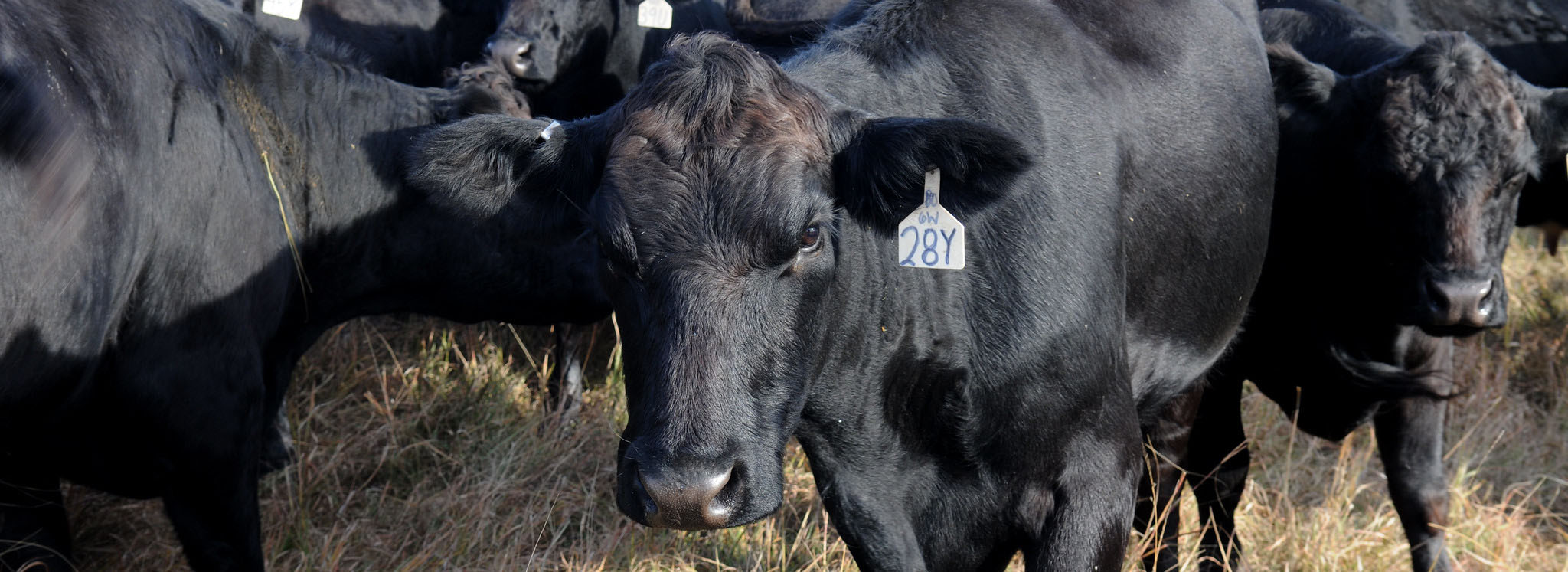
To reduce shrink, cattle producers should consider taking calves to sale as late as possible.
K-State beef cattle experts provide insight on practical ways to reduce weight loss while transporting cattle to sale
At a glance: Maximizing profitability in a cattle operation starts with managing the hidden costs. According to K-State beef cattle experts, proper animal handling is key to minimizing shrink—weight loss that can quietly drain your bottom line.
Brad White, 785-532-4243, bwhite@vet.k-state.edu
Related: Beef Cattle Institute Cattle Chat
Aug. 26, 2025
By Chevy-Lynn Vaske, K-State Research and Extension news service
MANHATTAN, Kan. — Every pound counts at the sale barn — and sometimes, the weight loss happens long before calves ever hit the scale.
For cattle producers, shrink isn’t just a biological response to stress; it’s an invisible drain on profit margins that can be managed with the right timing and techniques, according to K-State beef cattle experts.
K-State veterinarian Brad White explains “shrink” as the weight loss that occurs between gathering calves at home and their final weigh-in at the scale.
“In general, I expect calves to lose weight if they’re sitting in a new environment, new water source, just transported and everything else,” veterinarian Bob Larson said. “So even though it might be easiest for me to take calves on the day that’s most convenient for me, in order to address shrink, I think it’s better to move that transport to the sale as late as possible.”
There are also economic implications associated with shrink.
“You think about a 500-pound steer; you know, every 1% difference in shrink is 5 pounds,” Larson said. “And so you add a couple more percentages of shrink, and the amount of money we are talking about is easily offset by hiring somebody to help me gather them.”
Proper cattle handling techniques play a critical role in minimizing weight loss during the marketing process, the experts emphasized.
“We feel stressed because we have things to do, and we start rushing and pushing the cattle harder. We start losing those low-stress handling principles in the process,” beef cattle nutritionist Phillip Lancaster said.
“Now that they are stressed, they have an increase in urination, defecation, and they start losing fluids and losing weight quicker,” Lancaster said.
For producers concerned about shrink, online auction platforms may offer a useful alternative.
“One tool that producers have is methods that limit the amount of time the calves spend in the marketing system, such as marketing online,” Larson said.
The specialists concluded that shrink represents an invisible cost that doesn’t appear on invoices but significantly impacts producer profitability, making proper management essential for maximizing returns.
More on this topic is available on the latest episode of the K-State BCI Cattle Chat podcast.
***

K‑State Research and Extension is a short name for the Kansas State University Agricultural Experiment Station and Cooperative Extension Service, a program designed to generate and distribute useful knowledge for the well‑being of Kansans. Supported by county, state, federal and private funds, the program has county extension offices, experiment fields, area extension offices and regional research centers statewide. Its headquarters is on the K‑State campus in Manhattan. For more information, visit www.ksre.ksu.edu. K-State Research and Extension is an equal opportunity provider and employer.