Kansas Profile – Now That’s Rural: Paul Bahnmaier, Lecompton
At a glance: In the bitter political debates of the 1850s, one city’s name was particularly prominent: Lecompton, Kansas. Lecompton would be named the capitol of Kansas territory after a pro-slavery constitution was adopted following a rigged election, but this would be rejected by Congress. These actions would lead to the beginning of the Civil War.
More information: Ron Wilson, rwilson@ksu.edu, 785-532-7690
Photos: Ron Wilson | Paul Bahnmaier
Website: Huck Boyd National Institute for Rural Development
Oct. 15, 2025
By Ron Wilson, director of the Huck Boyd National Institute for Rural Development at Kansas State University
When and where did the Civil War begin?
Was it when Abraham Lincoln was elected president? When Fort Sumter was fired on by the Confederacy?
A good case can be made that the political event that precipitated the Civil War took place in a rural Kansas town that would become the centerpoint of national debate.
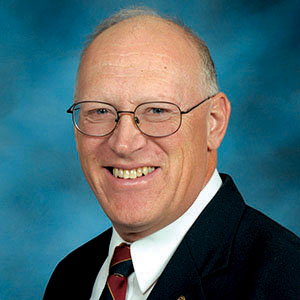
 Paul Bahnmaier is president of the Lecompton Historical Society which operates the Territorial Museum and other historic properties in Lecompton. He has deep roots here, going back to when his great-grandfather immigrated from Germany and found work as a tailor at a local hotel.
At right: Paul Bahnmaier | Download this photo
Kansas became a territory in 1854. Under the Kansas-Nebraska Act, voters of each state were to determine if slavery would be allowed in that state or not.
This led to “Bleeding Kansas” because of the conflict and violence that ensued. For example, Lawrence was sacked by a pro-slavery mob and John Brown led a retaliatory massacre.
In order to influence the vote for their respective viewpoints, free staters came to Kansas territory from New England and pro-slavery border ruffians came from Missouri. In a rigged election, the pro-slavery faction won.
The city of Lecompton was named the territorial capitol in 1855. Funds were allocated for a capitol building. Nine territorial governors would serve in Lecompton.
What free-staters called the “bogus legislature” drafted a pro-slavery constitution and sent it to Congress for approval so that Kansas could become a state. With strong support from Democratic President James Buchanan, the constitution was approved by the Senate. However, in the U.S. House, it failed by eight votes.
“We were within eight votes of Lecompton being the state capitol,” Bahnmaier said. Free state forces rallied. The Kansas election was found to have been fraudulent. Free staters prevailed in new elections. Eventually, Topeka was designated as the capitol.
In Lecompton, the site that was to have been the capitol building would become Lane University. Among the students at Lane were Ida Stover and David Eisenhower. They would marry in the college chapel and become parents of Dwight D. Eisenhower, the 34th president of the United States.
Today, the former Lane University building serves as the Territorial Museum, with hundreds of historic artifacts on display. The chapel where the Eisenhowers were married has been restored in gorgeous form. During the holidays, the museum displays nearly 200 antique Christmas trees and ornaments.
Lecompton played a huge role in the nation’s turbulent debate. On the House floor, the debate over the Lecompton Constitution was so intense that a fight broke out. One Republican yanked the wig off the head of his Democratic colleague and announced, “I’ve scalped him!”
Passionate divisions split the Democratic Party into factions. Four candidates ran for president in 1860. This made it possible for Lincoln to win the presidential election with only 39% of the popular vote.
“Lincoln would not have been president except for the Lecompton Constitution,” wrote Jonathan Earle, a history professor at the University of Kansas.
Lecompton was so prominent that it became part of the name of a political party. A splinter group of northern Democrats, infuriated by the Lecompton Constitution, ran as the People’s Anti-Lecompton Ticket – and elected eight members to Congress!
“Lecompton was named at least 55 times during the Lincoln-Douglas debates,” Bahnmaier said. “A historian from the Lincoln museum in Springfield, Illinois said that Lecompton was the word, not a word, for four years during that time.”
Today, Lecompton is a rural community of 588 people. Now, that’s rural.
Lecompton is packed with historic sites. In addition to the Territorial Museum, there is the 1856 Democratic headquarters, the 1892 city jail, national historic landmark Constitution Hall where the constitution was drafted, and more.
“We recognize the importance of this history to the nation,” Bahnmaier said.
For more information, see www.lecomptonkansas.com.
When and where did the Civil War begin? One can make the case that the adoption of the state constitution in Lecompton, Kansas set in motion the events that would lead to the Civil War.
That is why Lecompton can claim to be the “Civil War birthplace” and the place “where slavery began to die.”
Audio and text files of Kansas Profiles are available at www.huckboydinstitute.org/kansas-profiles. For more information about the Huck Boyd Institute, interested persons can visit www.huckboydinstitute.org.
***

K‑State Research and Extension is a short name for the Kansas State University Agricultural Experiment Station and Cooperative Extension Service, a program designed to generate and distribute useful knowledge for the well‑being of Kansans. Supported by county, state, federal and private funds, the program has county extension offices, experiment fields, area extension offices and regional research centers statewide. Its headquarters is on the K‑State campus in Manhattan. For more information, visit www.ksre.ksu.edu. K-State Research and Extension is an equal opportunity provider and employer.