Cattle Chat: Getting accurate results from pregnancy checking your cows
K-State beef cattle experts explain pregnancy-checking timing, methods and the role of early pregnancy loss
At a glance: K-State Beef Cattle Institute experts say pregnancy checking is a valuable management tool, but timing and method selection play a major role in accuracy. Understanding early pregnancy loss helps producers interpret results correctly and make informed nutrition, culling and marketing decisions.
More information:
Brad White
785-532-4243
bwhite@vet.k-state.edu
Bob Larson
785-532-5700
rlarson@vet.k-state.edu
Related: K-State BCI Cattle Chat podcast
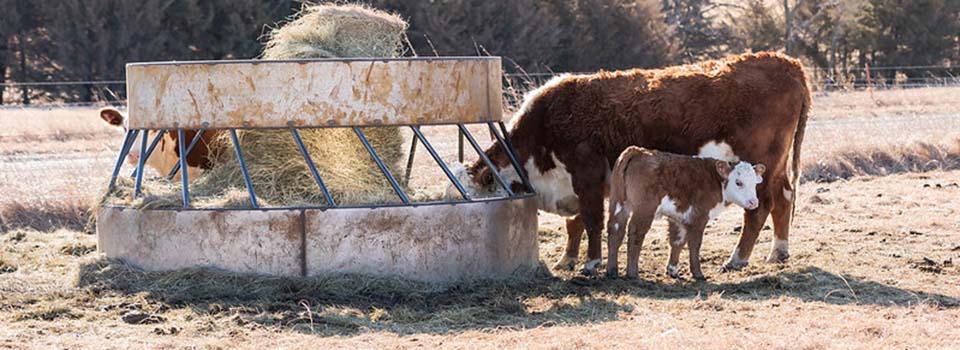
K-State veterinarian Bob Larson says timing is important in pregnancy prognosis.
Jan. 6, 2026
By Chevy-Lynn Vaske, K-State Extension news service
MANHATTAN, Kan. –Pregnancy checking is often circled on the calendar months in advance, but for cattle producers, knowing when to check can be just as important as knowing how.
On a recent episode of the Beef Cattle Institute’s Cattle Chat podcast, experts answered a listener’s question about pregnancy checking, offering guidance on timing, available methods and why early pregnancy loss can complicate results.
The group explained that pregnancy checking serves as more than a headcount of bred cows — it is a management tool that influences nutrition plans, marketing decisions and culling strategies. However, checking too early can lead to uncertainty.
“Timing really matters when it comes to pregnancy diagnosis,” K-State veterinarian Bob Larson said. “If you check too early, you may identify pregnancies that won’t be maintained or miss pregnancies that occur later.”
Experts discussed common pregnancy-checking methods, including palpation, ultrasound and blood-based tests, noting that each option varies in accuracy depending on how far along a cow is in gestation. While early detection can be appealing, it also increases the likelihood of misinterpreting results due to natural biological processes.
Early embryonic loss was highlighted as a normal but often misunderstood factor in reproductive management. Losses that occur early in gestation frequently go unnoticed but can affect pregnancy-check outcomes, especially when cows are evaluated soon after breeding.
“Early pregnancy loss is part of normal biology,” Larson said. “Understanding that helps producers make better sense of pregnancy-check results and avoid frustration when numbers don’t look the way they expect.”
The team encouraged producers to align pregnancy-checking timing with their herd goals, labor availability and management plans. Selecting the appropriate method and understanding its limitations can help ensure pregnancy data is both accurate and useful.
To learn more about pregnancy checking or learn more from the beef cattle experts, check out the BCI Cattle Chat podcast. For questions, reach out on social media or send an email to bci@ksu.edu.
***

K‑State Extension is a short name for the Kansas State University Cooperative Extension Service, a program designed to generate and distribute useful knowledge for the wellbeing of Kansans. Supported by county, state, federal and private funds, the program has county extension offices statewide. Its headquarters is on the K‑State campus in Manhattan. For more information, visit www.ksre.ksu.edu. K-State Extension is an equal opportunity provider and employer.