Kansas Profile – Now That’s Rural: Sarah Bell, Kansas Museum of History
At a glance: Sarah Bell became director of the Kansas Museum of History while it was in the process of a $7 million renovation. The museum has been reorganized around key themes and, after three years of work, has reopened for visitors.
More information: Ron Wilson, rwilson@ksu.edu, 785-532-7690
Photos: Ron Wilson | Sarah Bell
Website: Huck Boyd National Institute for Rural Development
Jan. 28, 2026
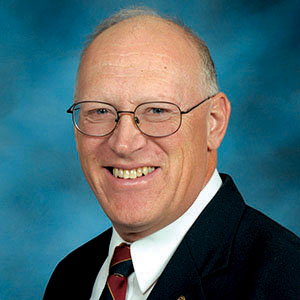
By Ron Wilson, director of the Huck Boyd National Institute for Rural Development at Kansas State University
What is Kansas? Why Kansas?
Those are fundamental questions that demand thought and reflection, and would benefit from a place to learn and share the history of our state. Such a place exists at the Kansas Museum of History, which recently reopened after a multi-million dollar renovation.
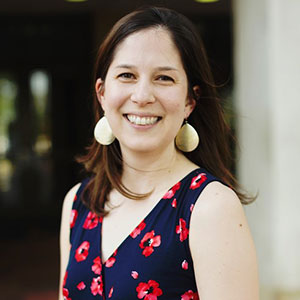 Dr. Sarah Bell is director of the Kansas Museum of History, located west of Topeka. Bell is a Nebraska native who earned a master’s degree in museum studies, and a doctorate in history at the University of Kansas.
At right: Sarah Bell | Download this photo
“It was while I did my graduate studies that I fell in love with Kansas,” Bell said.
Bell was working at a Lawrence museum when the directorship of the Kansas Museum of History came open.
“This has long been a dream of mine, but I was eight months pregnant at the time,” Bell said. Her husband encouraged her to apply. She got the job.
“We now have a little Kansan of our own, three-and-a-half year old Felix,” Bell said proudly.
The current Kansas Museum of History opened in 1984. Jennie Chinn, the previous director of the Kansas Historical Society, envisioned a new and improved version of the museum and led the effort for a major renovation. After a private fundraising campaign, the building closed for the renovation to take place.
Tragically, Chinn perished suddenly from an accident in her home. Chinn was succeeded by Patrick Zollner who carried forward her vision and brought Bell on board as museum director.
By the time Bell took the job, the museum had closed for renovation and initial design work had begun. Bell and her team crystallized the themes for the new exhibits. The museum re-opened in November, 2025.
The new museum displays are organized thematically, rather than chronologically. “This thematic structure reinforces the relevance of history to our lives today,” Bell said.
The themes include:
- What is Kansas?
- Why Kansas?
- Bleeding Kansas.
- Making Kansas.
- Connecting Kansas.
- Changing Kansas.
- The Future of Kansas.
(For visitors, there should be no doubt what state this is about.)
The entrance includes displays of Kansas state symbols, including life-size bison. Next is an inspiring video narrated by award-winning film director Kevin Willmott.
Long-time favorites remain on display, such as the 1860s log cabin and the Atchison, Topeka, and Santa Fe train engine. There are artifacts from John Brown, Carry Nation, and Dwight Eisenhower -- and much, much more.
An innovative ramp allows never-before-seen perspectives on exhibits, including an up-close view of a 1914 biplane. A huge, beautiful Stan Herd mural is still in progress.
The museum’s exhibits describe a wide range of elements, including pioneers and agriculture, urban and rural, Native American tribes and formerly enslaved people. There are displays on women’s suffrage, cattle trails and cowboys, military battle flags, and pioneering newspapermen and women.
The 30,000 square foot museum now includes a full-size boxcar that shares the story of how train cars once served as homes for Hispanic-Americans. The special exhibits gallery will host changing exhibits. A large open window allows visitors to see the huge storage area where the remainder of the museum’s 122,000 artifacts are housed.
Videos, artifacts, and panel displays are located throughout. One video is narrated by country music star Martina McBride, who grew up in the rural Kansas community of Sharon, population 147 people. Now, that’s rural.
The renovation cost nearly $7 million, funded mostly by private philanthropy. “We were able to stretch that budget because of the work done by our talented staff in-house,” Bell said.
“I believe we’ve created a really great experience, and our visitors say, ‘Wow,’ just as Jennie Chinn intended,” Bell said.
She adds: “We’re really proud of what we’ve done and we want people to keep coming back. I think about my son. This is for his generation, too.”
For more information, see www.kansashistory.gov/museum.
Audio and text files of Kansas Profiles are available at www.huckboydinstitute.org/kansas-profiles. For more information about the Huck Boyd Institute, interested persons can visit www.huckboydinstitute.org.
***

K‑State Extension is a short name for the Kansas State University Cooperative Extension Service, a program designed to generate and distribute useful knowledge for the wellbeing of Kansans. Supported by county, state, federal and private funds, the program has county extension offices statewide. Its headquarters is on the K‑State campus in Manhattan. For more information, visit www.ksre.ksu.edu. K-State Extension is an equal opportunity provider and employer.