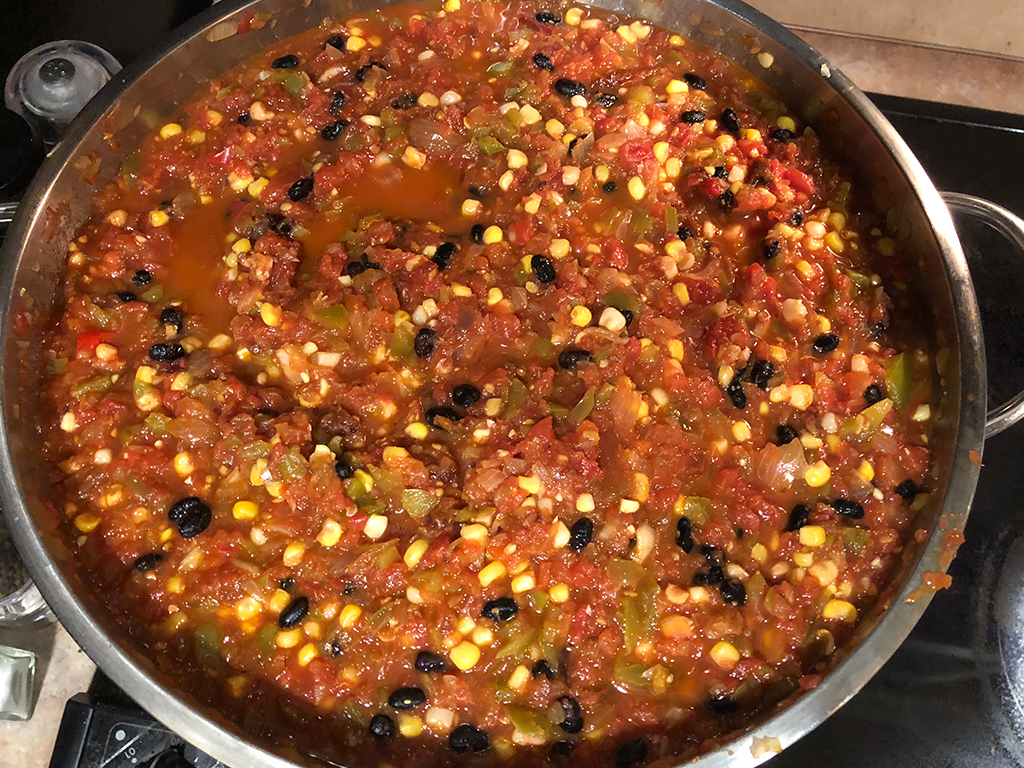
Salsa is a popular condiment made from home vegetable gardens. K-State Research and Extension has resources available to help ensure it’s safe to eat right away or preserve to enjoy with future meals. | Download this photo.
Fresh tomatoes, peppers and onions equal…what else? Salsa, of course!
A Kansas State University food scientist shares tips
Sept. 12, 2018
MANHATTAN, Kan. — Summer vegetables are arriving by the armload in kitchens across the country. And plenty of those tomatoes, peppers, onions and herbs are going into homemade salsa.
Not all salsas are created equal, however, according to Kansas State University’s Karen Blakeslee.
Recipes created in home kitchens for salsa are suitable for eating fresh or freezing, but if you’re planning to preserve the popular condiment for later by canning, stick to tested recipes that keep ingredients at safe pH levels.
“No one wants to end a party with everyone getting sick from the salsa,” said Blakeslee, who is the Rapid Response Center Coordinator with K-State Research and Extension in food science.
Salsas include high-acid and low-acid ingredients and are considered acidified food, appropriate for boiling water bath canning if the final pH is less than 4.6, she said. The safety of home canned salsa depends on the combination of ingredients, procedures used in preparation, the acidity, and consistency of the final product.
The size of jar can also affect safety. All tested salsa recipes are canned in pint jars. If larger jars are used, the safety of the salsa can be in jeopardy.
“Using a process time from another recipe is only a guess for homemade recipes and can cause spoilage and potential foodborne illness,” she said.
Blakeslee, who is an avid cook and home canner herself and a proponent of making the most of your (or your neighbor’s) vegetable garden, says to start with high-quality, disease-free produce.
She adds, “Be smart about food preservation. Look for reliable recipe sources to increase your chances for safe food. It is a waste of good food if safety is ignored from beginning to end.”
K-State Research and Extension has publications free for viewing and downloading, including “Preserving Tomatoes” or the Spanish version “Conservas Frescas, Conservas Seguras, Tomates. Also available are “Preserve it Fresh, Preserve it Safe” “Sassy Safe Salsa at Home” plus a Spanish version “Atrevida Salsa Casera Segura.”
Kansas State University is committed to providing equal access opportunity and reasonable accommodation to campus programs and services for faculty, staff and students. If you require accommodation to view or hear a video live stream or archive, please submit a request for accommodation. Students should make their request to the Student Access Center. All others should request accommodation through Human Capital Services.