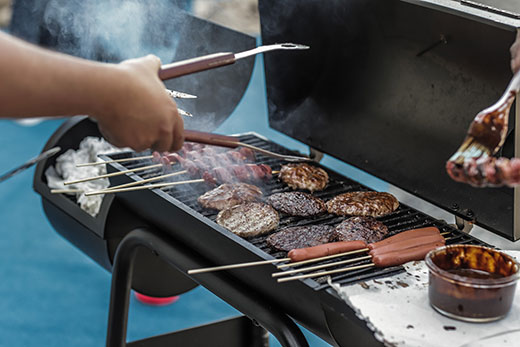
K-State food specialist Karen Blakeslee urges party-goers to follow food safety tips to keep the fun in outdoor parties.
Food safety takes spotlight for outdoor picnics, grilling
Make a plan to keep the party safe, says K-State’s Blakeslee
June 29, 2020
MANHATTAN, Kan. – For many, the Fourth of July holiday may be a day off from work, but Karen Blakeslee says it’s not a day off from food safety.
“Handling food safely is important every day, not just at holidays,” said Blakeslee, a food safety specialist with K-State Research and Extension. “During the summer, it is more important to follow the four core principals of cook, chill, clean and separate.”
She notes that foodborne illness often peaks in the summer for a couple important reasons: Bacteria multiply faster in warmer temperatures, and preparing food outdoors makes safe food handling more difficult. “Temperature abused food can allow bacteria to grow and multiply every 20 minutes,” Blakeslee said.
For picnics and barbecues, Blakeslee provides some timely tips:
- Cook food to the recommended internal temperature. If bacteria are present on food, they can be killed by cooking meat properly. There is no need to wash meat or poultry. Marinate meat in the refrigerator and discard unused marinade. For popular picnic foods, the suggested internal temperatures are 165 degrees Fahrenheit for poultry; 160 F for ground meat and hamburgers; and 145 F for beef, pork, lamb and veal steaks or chops.
- Chill foods that won’t be in a refrigerator. Use several ice chests to store cold food below 40 F and keep it cold until meal time. Don’t leave picnic food out for more than two hours or one hour if outdoor temperatures are above 90 F. Once the meal is finished, put leftovers on ice or in the refrigerator promptly.
- Clean produce, surfaces and hands regularly. Wash produce with plain water before prepping or cooking. Rub or scrub when possible to remove dirt. Clean surfaces often. When washing hands, any soap that produces bubbles -- which break up bacteria and germs – will work. Rub between fingers, back of hands and up your arms, too. If you don’t have running water, moist disposable towelettes are a good choice.
- Separate foods. Keep raw foods away from ready-to-eat foods. Use separate plates and utensils for raw meat and cooked meat. Or, wash plates and utensils before using them for cooked meat.
“It is easy to get distracted with summer activities and forget about food,” said Blakeslee, who suggests keeping the meal simple.
“Plan ahead to reduce mishaps since cooking and eating outdoors is out of your normal routine. Keep food safe for everyone at your party to enjoy.”
For more outdoor food safety tips, visit the K-State Research and Extension website at www.ksre.k-state.edu/foodsafety/topics/outdoor.html.