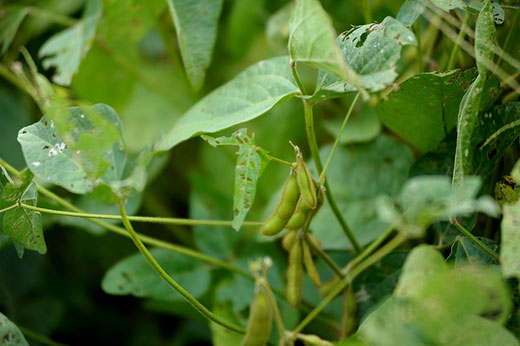
In analyzing 40 years’ worth of data, Kansas State University and University of Minnesota researchers found that soybean yields have increased 50% but soy protein has slightly declined. | Download this photo.
Study: Seed protein does not reflect key amino acid levels in soybeans released over the last four decades
Kansas State University study examined 40 years of data
March 1, 2021
Note: A Kansas State University study examined the composition of thirteen soybean genotypes released between 1980 and 2014, focusing on the levels of eighteen amino acids relative to protein and yield. They found that seed protein levels do not provide a complete characterization of relevant changes for critical seed amino acids, and that additional external nitrogen does not result in an improved amino acid composition.
MANHATTAN, Kan. – From edamame to cooking oil and tofu to livestock rations, soybeans are an important source of protein in food and feed around the world and soybean production contributes a remarkable amount to the farm economy.
For that reason, soybean breeders have worked for years to boost the yield potential from each plant. But Kansas State University and University of Minnesota researchers found in a checkoff-funded study that while yields have increased, important protein content of soybean seeds has slipped.
“Yield improvement, which increased by 50%, led to a slight decline in protein concentration for soybean seeds,” said K-State Research and Extension agronomist Ignacio Ciampitti, “The selection for high-yielding genotypes has reduced seed protein concentration over time, but little is known about its impact on amino acids, which are the building blocks of protein.”
“Increasing the concentration of oil or protein, or improving the amino acid composition, can all increase the market value of soybeans,” said the United Soybean Board’s meal target area coordinator Rochelle Krusemark.
In studying 40 years’ worth of data, the researchers found that overall seed yield increased by 50% and protein decreased by 1.2% when comparing 1980s genotypes and 2010 genotypes.
The team, led by Ciampitti, included University of Minnesota associate professor, Seth Naeve, K-State post-doctoral researcher, Andre Reis and K-State graduate students Luiz Moro Rosso (current), Santiago Tamagno and Osler Ortez (former students of Ciampitti’s Lab).
Results of the study are available online in a new publication Soybean Seed Composition: Changes in Protein and Amino Acids Over Four Decades. More information can be found in the journal publication, Historical trend on seed amino acid concentration does not follow protein changes in soybeans.
Because of amino acids’ importance relative to protein in soy, experiments were designed to evaluate how amino acids changed over time, and if a high-nitrogen environment could alter protein or amino acid changes with yield improvement.
The team observed similar negative rates in absolute concentrations for some amino acids, such as arginine and glutamic acids, but not for the rest of the amino acids, relative to protein, Ciampitti said. They determined that the concept of utilizing seed protein concentration genetic gain as an indicator of potential changes in amino acids is not valid .
Ciampitti said the next steps for the researchers involve looking at management options to improve protein concentration in order to develop more guidance for farmers on how they can improve both yield and seed quality, including protein and other seed components.
The K-State-Minnesota study was part of a larger three-year study underway by seven universities and a private consultant, focused on improving the quality of soybean seeds.
Besides K-State, the collaborators include researchers at South Dakota State University, Iowa State University, University of Arkansas, University of Illinois, Purdue University and University of Minnesota. Dan Davidson, Nebraska-based consultant, is also part of the project. More information on their work to date is available in a Soybean Research and Information Network article.
Overall, the larger study showed:
- The addition of small amounts of applied nitrogen – less than 50 pounds per acre – improved seed protein and amino acid composition.
- Diverse crop rotations can improve soy protein levels.
- Certain practices such as no-till, early planting date, lower seed populations, row width, seed treatment, foliar protection and foliar feeding did not appear to affect protein content.
Maturity group selection did not influence composition in the northern states but did in the southern states with longer maturity groups showing a decline in oil and an increase in protein.