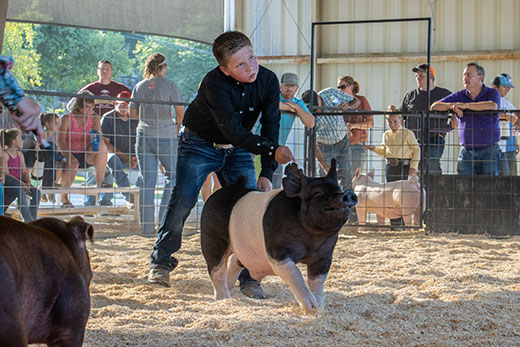
K-State livestock expert Joel DeRouchey urges youth to implement basic biosecurity practices to keep animals safe during and after the fair.
K-State livestock expert urges youth to follow biosecurity practices before and after fair
DeRouchey says watch for signs of sickness, consult with vet
July 14, 2023
By Bailee Farmer, K-State Research and Extension news service
MANHATTAN, Kan. – A Kansas State University livestock specialist is urging youth and others showing animals at local fairs to take the time to make sure that those animals remain safe – both at the fair and during transportation.
Joel DeRouchey said youth and others associated with showing animals should have basic biosecurity practices in place to prevent the spread of diseases between animals, and to contain the sickness when it occurs.
According to DeRouchey, swine can become infected or spread disease to other pigs when mixed. He advises those showing swine to look for symptoms before, during and after fair season.
“If your pig begins to cough, has a loose stool or isn't eating, it is important to consult a veterinarian on a treatment plan to help cure and prevent the spread of the sickness,” he said.
DeRouchey said maintaining biosecurity at the fair can be hard with multiple showmen bringing hogs together. He said a practice using something solid -- such as sorting boards inside of the pens -- to prevent the hogs from making nose to nose contact, which is one way in which disease is spread.
According to DeRouchey, “if you're bringing your livestock back home from the fair, you need to have in place a plan to minimize risk, or consult your veterinarian if you need assistance with the plan.”
“Isolation is the primary way to prevent bringing sicknesses home to your (non-fair) animals,” he said. “If you do not have a separate area to isolate your (fair animals), then separate the hogs that were at the fair in a different part of the barn from the others.”
Another way to prevent spreading sickness includes cleaning and disinfecting all equipment that was taken to the fair, or used frequently at the farm, DeRouchey said. Sickness can also be carried on clothes and shoes, so making sure to thoroughly clean and change clothing between the fairgrounds and your barn.
“If you do have a sick animal, it is important to minimize the opportunity for it to spread to other pigs,” said DeRouchey, who encourages youth to become certified by a program known as YQCA, or Youth for the Quality Care of Animals.
More information on livestock care is also available from K-State’s Department of Animals Sciences and Industry.