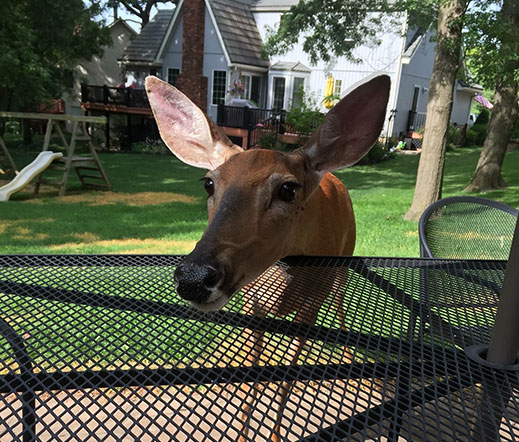
As urbanization increases across North America, some larger mammals are being driven out of cities, according to a recent study.
Study: Urbanization, shifting climate driving some mammals away from cities
K-State wildlife ecologist outlines changes to biodiversity
Sept. 26, 2023
By Pat Melgares, K-State Research and Extension news service
MANHATTAN, Kan. – The growth of cities and shifting climate conditions are driving some mammals away from urban areas, changing the biodiversity of those cities and creating new challenges in how to effectively conserve some species, according to Kansas State University wildlife ecologist Adam Ahlers.
Ahlers was part of a vast research project that surveyed 725 sites in 20 North American cities to determine the effects of urbanization, or the process by which cities grow and human populations become concentrated in urban areas.
The research, titled Urbanization, climate and species traits shape mammal communities from local to continental scales, was recently published in Nature Ecology and Evolution, and is available online.
“Urbanization is occurring rapidly across Earth and is a significant driver of land use change that can affect the distribution and diversity of mammal communities,” Ahlers said. “We need a clearer understanding of how these landscape changes and species biological traits shape mammal communities in our local cities and across North America.”
Biodiversity loss in cities, Ahlers says, “affects everyone.” According to the World Health Organization, biodiversity loss can affect human health in ways that aren’t always apparent, including disease transmission, fresh water, medicines and food security.
In the multi-year study, researchers tracked 37 native mammal species using wildlife cameras to form a picture of how growth of urban areas affected where these species occurred. Ahlers’ work focused on Manhattan, Kansas; similar-sized cities included Sanford, Florida and Iowa City, Iowa, while larger metropolitan areas included Chicago, Denver and Los Angeles, to name a few.
“The number of species and occupancy in cities were generally negatively related to urbanization, but more so in warmer cities that had less vegetation,” Ahlers said. “Interestingly, in all cities where we conducted this work, larger-bodied mammals were the most negatively affected by urbanization. Shifting climate conditions are likely to worsen the effects of urbanization on some mammal communities.”
The study was led by Arizona State University urban ecologist Jeff Haight using data from the Urban Wildlife Information Network, a multi-city research group that routinely coordinates field sampling of mammals. The research team included urban ecologists, behavioral ecologists, population biologists, quantitative ecologists and more. Many of the researchers work for universities, zoos, non-profit organizations and other groups.
Ahlers said the results are important for conservationists.
“By understanding how urban expansion – and subsequent changes in land-use – impacts mammal communities, we will be able to better predict the impacts of climate change and develop effective conservation strategies for specific mammal species and communities,” he said.