Board Excellence Newsletter, October 2025
- From the Director for Extension: Just ask them!
- Agent Performance Review Feedback.
- Self Assessment Leads to Effective Boards.
- Board and PDC Orientation Modules Available.
- State Extension Advisory Council Nominations are Due Soon.
- Support Local Agents' Professional Association Memberships.
- Save the Date: Nov. 13 Partnership Meeting.
 From the Director for Extension:
Just ask them!
As board members, one of your key responsibilities is ensuring that your local program delivers a comprehensive educational program that meets community members’ needs. In the coming months, you'll exercise this responsibility by reviewing and approving the programming action plans your agents have developed. Board members are encouraged to take a thorough look at the action plans, engage in discussion with staff about them, and support agents as they sunset old programs to try new endeavors.
To ensure our programs are relevant, we need to address the real needs of the people we serve. Strong attendance doesn’t always mean we’re hitting the mark – there might be new issues that even our most engaged participants want us to tackle.
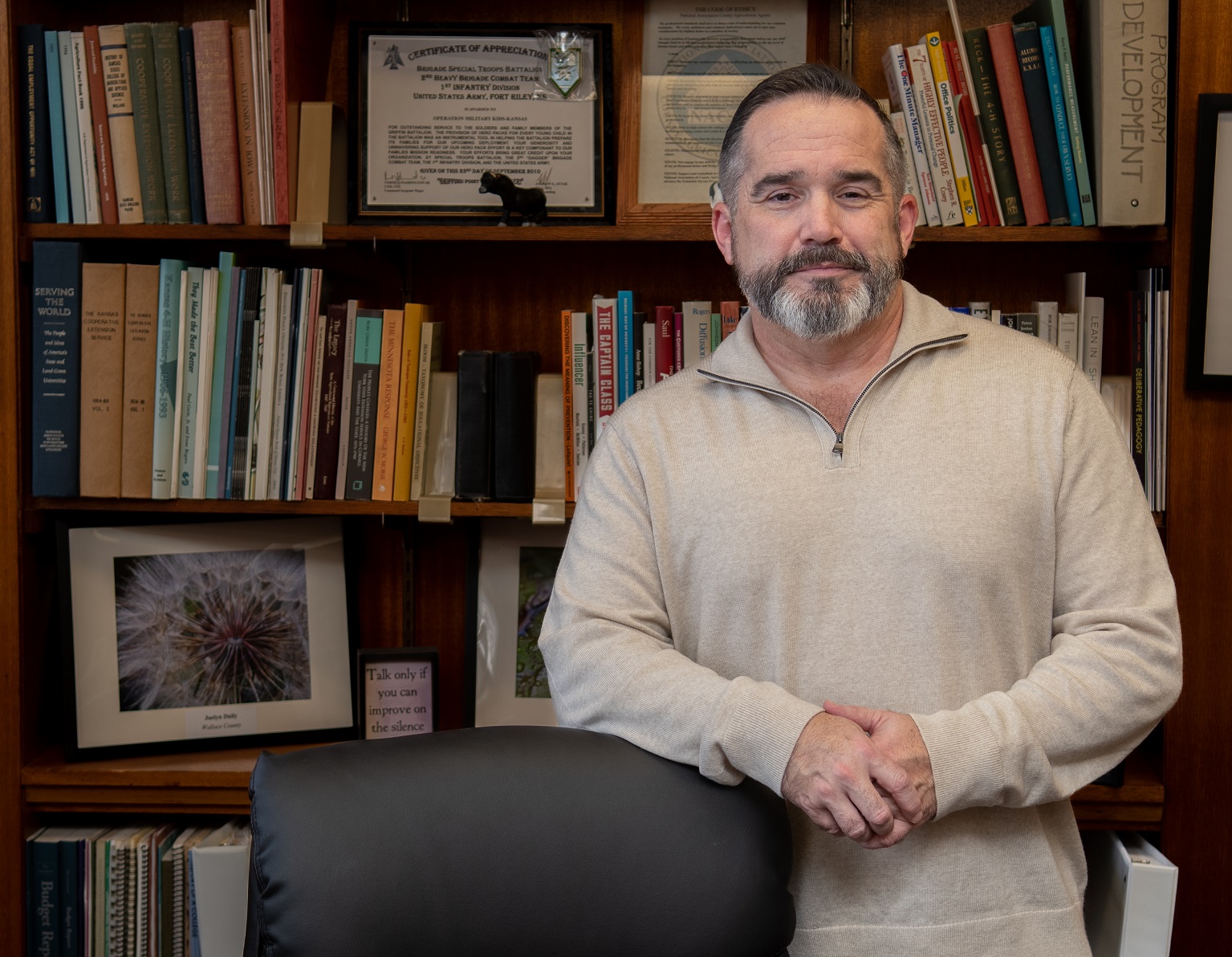
The best way to find out what those needs are is to ask. We can do that in a variety of ways. A great place to start is for board members to ensure that our program development committees (PDCs) meet regularly. They should discuss what issues need to be addressed that concern youth, families, farms and communities.
Also, pay attention to conversations happening in local coffee shops, schools, churches and community meetings. What issues are people talking about? Network with friends and colleagues to discover common needs that our programs should aim to address.
Review relevant information about community demographics and other data sources, such as the USDA Agriculture Statistics, All Things Kansas, Kansas Health Matters and Kansas Communities that Care. These data sources typically have county-level data that can be reviewed to help determine issues that need to be addressed.
Connect with community partners. Invite them to your next PDC meeting to talk about what they see as issues in the community. Often, those meetings can help identify potential collaborations.
Everyone wants programs that truly matter, so let’s focus on identifying needs instead of sticking with outdated programs and approaches.
 Agent Performance Review Feedback
Soon you will receive an email from PEARS Support indicating that it is time for agent performance reviews. This is a great time to celebrate agents’ accomplishments and give them suggestions for future directions. Agents truly value comments from board members. They are looking for what you thought were successes and want your perspective on their performance.
It’s easy to check the boxes, but providing context via written comments is vital — as the saying goes, “the devil is in the details.” If you have a specific example of something the agent did well, write down the experience. They will likely continue those positive efforts. If you have a suggestion for improvement, be courteous and provide details. They will likely try to change that behavior.
The performance review surveys are worded to reflect many of the agents’ responsibilities. Hopefully, as you ponder each question, you can think back to a specific situation you observed. Use those thoughts to add context to your answers. Words are important and will affect overall performance, so choose them wisely.
Thank you for your time and effort as a board member and for your commitment to your local communities.
 Self Assessment Leads to Effective Boards
By Jan. 1, local extension boards should complete the Excellence in Board Leadership Assessment (PDF), which helps boards assess their effectiveness and identify areas to strengthen.
The Excellence in Board Leadership Assessment is a joint project between the State Extension Advisory Council and extension administration. It is meant to support local unit extension boards in leadership and development. The assessment is designed for board members to review early in the year and determine areas to work on throughout the year. At the end of the year, each board member completes the assessment and reflects on the progress made throughout the year.
Once board members have completed the assessment, the board chair or local unit director will determine the final ranking and enter the results in the 2025 Excellence in Board Leadership survey or email a PDF of the final assessment to Laurie Chandler, lchandle@ksu.edu, by Jan. 1.
Last year, 52 of 67 local units completed their self-assessment. We look forward to seeing your local unit assessment for 2025!
 Board and PDC Orientation Modules Available
Being an extension board member is an important job, and it can be a big task to learn the responsibilities it entails. The New Board Member Orientation module is designed to help new board members understand their role and learn more about K-State Extension. New and continuing board members are encouraged to review the module before they take office and attend their first board meeting.
Board members can complete the module on their own or this can be a group activity at a board or Program Development Committee (PDC) meeting. In either situation, board members will also want to learn more about local unit operations, budgets, staffing plans and agent action plans.
PDC members share important ideas on how K-State Extension can help their local community. The PDC Orientation module helps members learn about their roles. It includes a short video, guidelines for adding new members and an overview of what PDC members are responsible for.
 State Extension Advisory Council Nominations are Due Soon
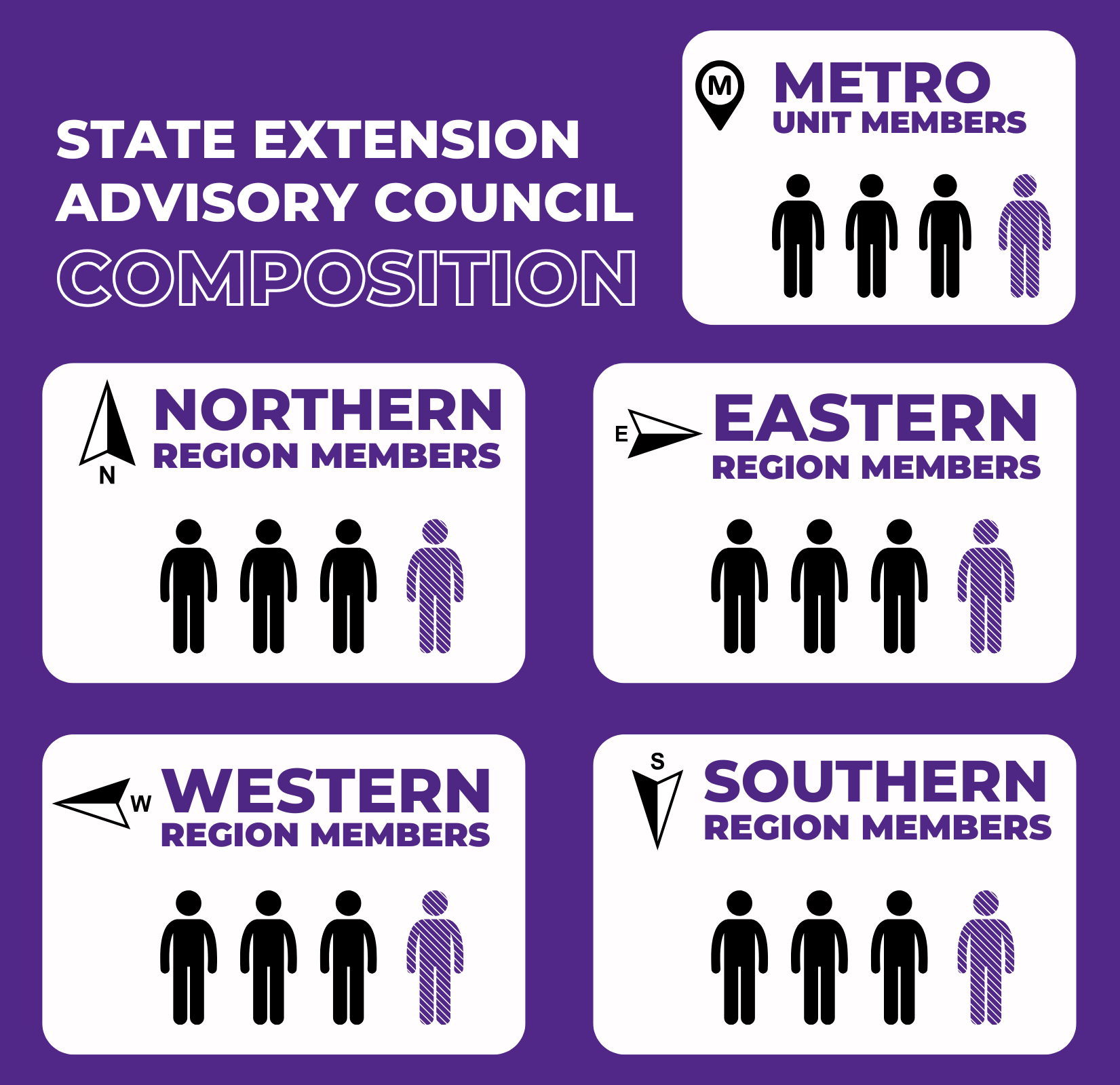
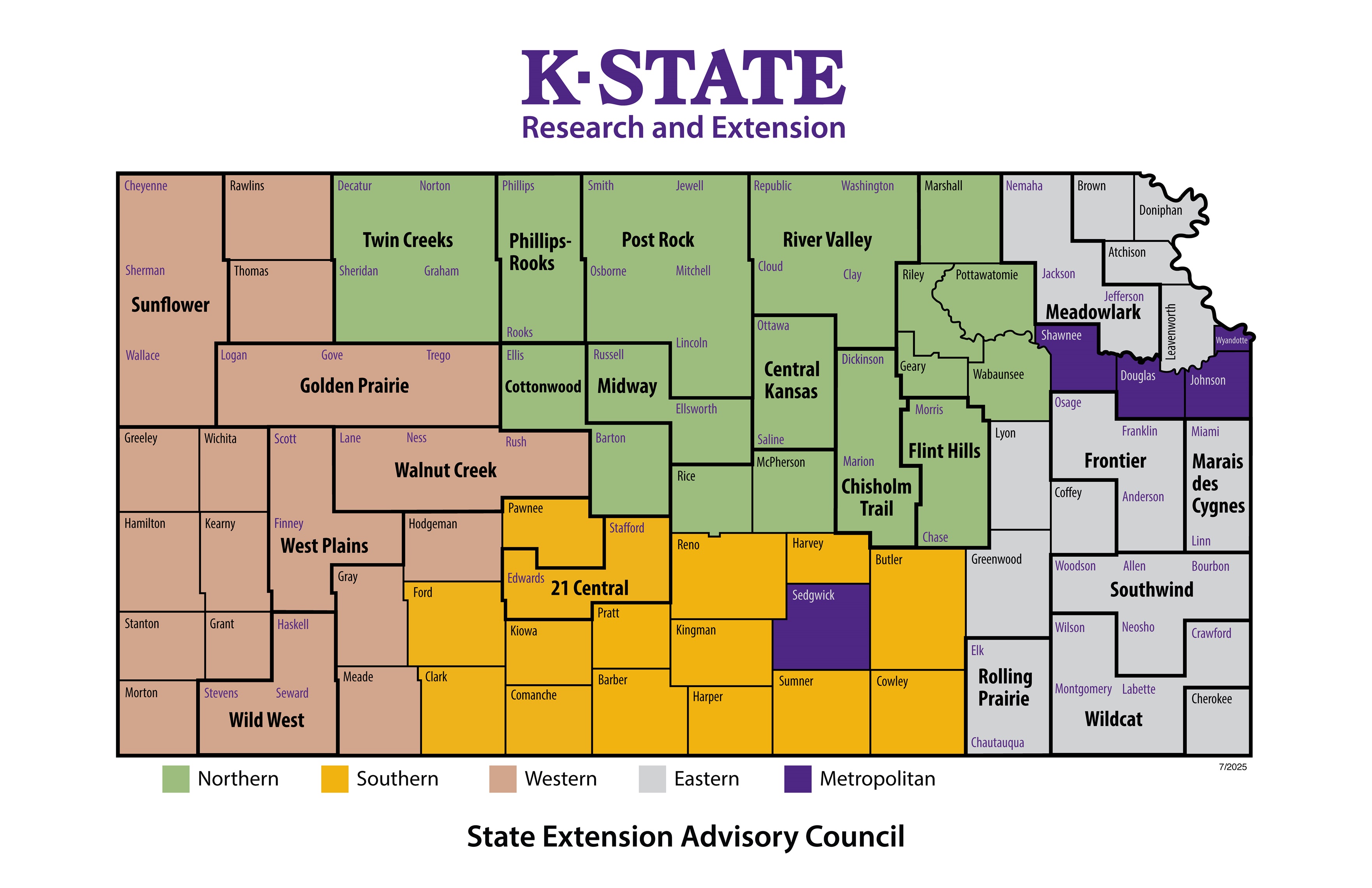
With the change from three to four extension administrative regions, the State Extension Advisory Council (SEAC) made some modifications to their by-laws at the August meeting. The council is seeking nominations for five open positions. One member from each of the four administrative regions and one from the metro counties are elected annually.
The term lasts four years and comes with an opportunity to visit Washington, DC to attend the Public Issues Leadership Development national conference.
The SEAC serves as a consulting group to the director for extension. The group traditionally meets in Topeka in February and at a rotating location in August, with occasional opportunities for further involvement.
The qualifications to serve as an SEAC board member are fairly simple. You need to have served as a board member on a local unit governing body. It is not required to have served as an officer.
Your nomination should contain a short biography of your experience and interest in extension. A picture of yourself helps personalize your nomination but is not required. The nominees' information will be circulated to local units in their respective regions to be voted on by those units.
Please submit nominations to Chris Onstad at constad@ksu.edu by Nov. 15. Election results will be available mid-December.

Support Local Agents' Professional Association Memberships
Staying updated and learning new things is important for extension employees. At K-State Extension, we believe in lifelong learning. This is not just for the people we serve, but also for our staff.
Professional development helps employees go from doing their jobs well to doing even better. Professional organizations are a great way for agents to learn and connect with extension workers in Kansas and other states.
Local boards should support agents in becoming members of these professional groups. Even though tax money can't be used for dues, local funds can be used to help pay for memberships. Each local unit has some extra money from gifts, grants and registrations. Membership fees are usually less than $150, and agents can join more than one group. Professional Association membership is a good investment in your local agents.