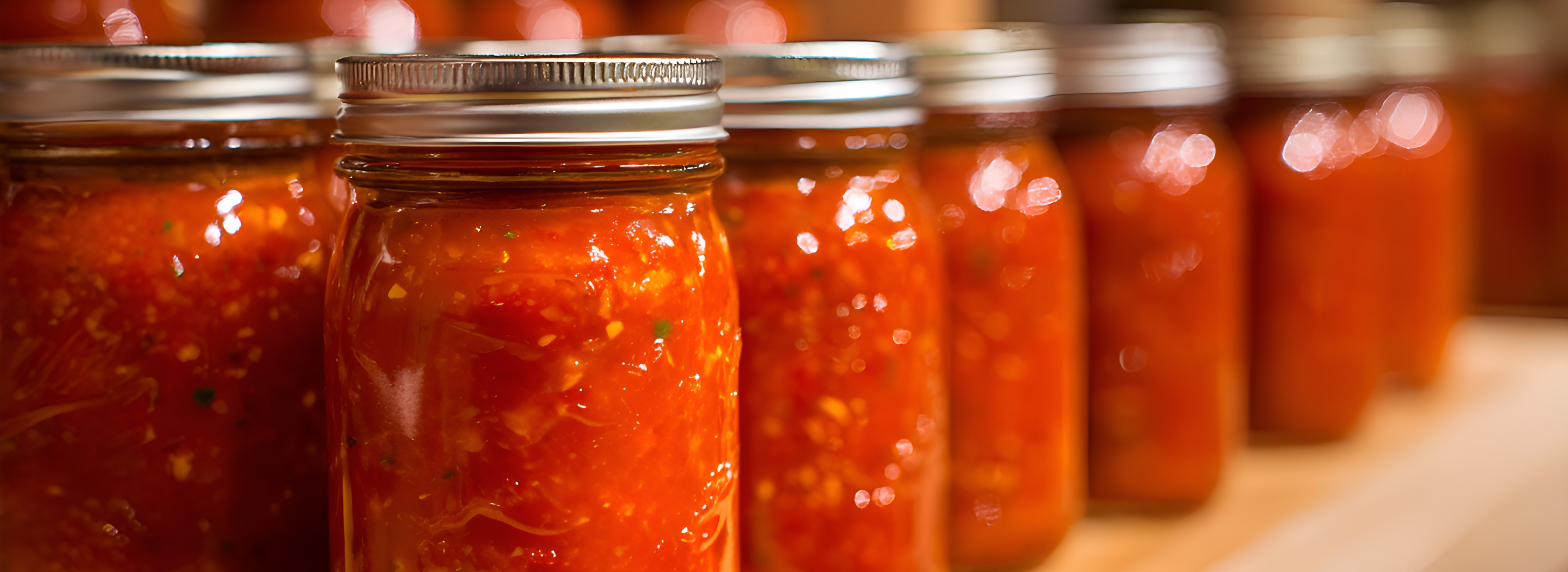
It's important to peel tomatoes before preserving them, says K-State food scientist Karen Blakeslee.
Peeling tomatoes before canning enhances flavor and safety
K-State food scientist shares tips for preserving a garden favorite
At a glance: Canning tomatoes is a great way to preserve a good garden harvest or excess store purchases, but if you’re leaving the skins on, you might be risking both flavor and food safety, says Kansas State University food scientist Karen Blakeslee.
More information: Karen Blakeslee, 785-532-1673, kblakesl@ksu.edu
Related: Rapid Response Center for Food Science | Preserving Tomatoes | You Asked It! food science newsletter
July 22, 2025
By Madeline Drake, K-State Research and Extension news service
MANHATTAN, Kan. – Canning tomatoes is a great way to preserve a good garden harvest or excess store purchases, but if you’re leaving the skins on, you might be risking both flavor and food safety, says Kansas State University food scientist Karen Blakeslee.
Blakeslee emphasized the importance of following recipes that have been researched to determine safe processing. That includes not skipping the critical step of peeling tomatoes.
“By choosing not to peel tomatoes, it changes how the heat transfers through the canning jar during processing,” said Blakeslee.
But that’s not all: “The primary reason for peeling tomatoes is to eliminate any potential sources of bacterial contamination.”
The National Center for Home Food Preservation recommends peeling tomatoes for canning because most tested recipes are developed with the skins removed. Tomato skins, while edible on a fresh tomato, can harbor bacteria and other microorganisms that may not be fully destroyed during the canning process.
In tested recipes, removing skins helps ensure that the tomatoes are clean and will be processed safely for long-term storage. Processing times are also based on using peeled tomatoes.
Peeling tomatoes not only increases safety but also improves the taste and texture of the final product. “Tomato skins tend to leave tough, chewy bits and can impart a bitter taste to the final product,” Blakeslee said.
Blakeslee adds that tomatoes aren’t the only food that should be peeled before canning. Other examples include potatoes, carrots, apples and peaches, which all have skins that can interfere with safe heat penetration, or which may carry harmful microbes.
Blakeslee reminds home canners that making changes to tested recipes can result in spoiled food and could also lead to food borne illnesses.
“Following the instructions in tested recipes is the best way to preserve foods safely,” she said.
Blakeslee publishes a monthly newsletter called You Asked It! that provides numerous tips on being safe and healthy. More information is also available from local extension offices in Kansas.
***

K‑State Research and Extension is a short name for the Kansas State University Agricultural Experiment Station and Cooperative Extension Service, a program designed to generate and distribute useful knowledge for the well‑being of Kansans. Supported by county, state, federal and private funds, the program has county extension offices, experiment fields, area extension offices and regional research centers statewide. Its headquarters is on the K‑State campus in Manhattan. For more information, visit www.ksre.ksu.edu. K-State Research and Extension is an equal opportunity provider and employer.