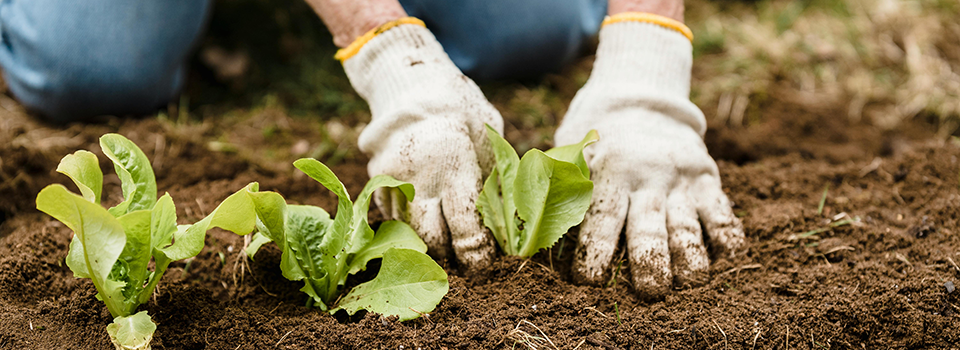
K-State horticulturalist recommends planning now for fall gardens.
Ready or not: It’s time to plant the fall vegetable garden
Fall crops may be seeded directly or transplanted, says K-State horticulture expert
At a glance: It may be mid-summer, but veteran gardeners know it’s time to start planning the fall vegetable garden. K-State horticulture expert Cynthia Domenghini shares tips for successful fall crops.
More information: Cynthia Domenghini, Cdom@ksu.edu
Photos: Cynthia Domenghini
Related: Horticulture Resource Center| Kansas Garden Guide
July 28, 2025
K-State Research and Extension news service
MANHATTAN, Kan. – It may be summer, but veteran gardeners know it’s time to start planning the fall vegetable garden.
“Fall gardens may face additional pressures of pests and heat, but the flavor that comes from these late season crops are often better (than summer crops),” said Kansas State University horticulture expert Cynthia Domenghini.
She notes that gardeners should count the number of days to harvest, as well as the crops’ tolerance to frost, before deciding when to plant fall crops. Crops may be seeded directly, or transplanted into the garden.
“Growing transplants is a good choice when the temperature is too warm for starting seeds in the ground, assuming you have grow lights and space available for starting them indoors,” Domenghini said.
She provides some tips for successful fall crops:
- When seeding crops directly into the garden, plant slightly deeper than recommended in the spring to take advantage of the cooler soil temperatures and moisture available.
- Water more frequently to prevent the seeds from drying out.
- Overhead watering often causes soil to crust, making it more difficult for young, tender plants to emerge. Prevent this by applying a light sprinkling of vermiculite or compost over the row after seeding, or use a soak hose or drip irrigation right next to the row to allow water to slowly seep into the ground.
Domenghini also suggests a timeline for planting fall crops:
Mid- July
Plant potatoes if you can find seed stock or have saved seed potatoes. Do not use freshly dug potatoes as they have built-in dormancy that will prevent growth. Also, grocery store potatoes are often treated, so they don’t sprout.
Cabbage, broccoli and cauliflower can be started from seed at this time. Choose a protected place where the soil can be kept moist and rabbits will not bother them. This will not be where they will grow the entire season; these crops will be transplanted in August.
Late July
Seed beets, carrots and beans.
Late July to early August
Seed spinach and long-season maturing lettuce. Leaf lettuce will be seeded later.
Second week of August
Transplant cabbage, broccoli and cauliflower to their final location.
Mid to late August
Seed radishes and leaf lettuce. There is no need to fertilize these crops before planting. Side-dress two weeks after transplanting, or four weeks after sowing seed, by applying two tablespoons of a 16-0-0 or one tablespoon of 27-3-3, 30-3-4 fertilizer (or something similar) per plant.
More information about fall gardening is available in the Kansas Garden Guide, available online from the K-State Research and Extension bookstore.
Domenghini and her colleagues in K-State's Department of Horticulture and Natural Resources produce a weekly Horticulture Newsletter with tips for maintaining home landscapes and gardens. The newsletter is available to view online or can be delivered by email each week.
Interested persons can subscribe to the weekly newsletter, or submit their garden and yard-related questions, by sending email to hortsupport@ksu.edu. More information also is available at your local K-State Research and Extension office.
***

K‑State Research and Extension is a short name for the Kansas State University Agricultural Experiment Station and Cooperative Extension Service, a program designed to generate and distribute useful knowledge for the well‑being of Kansans. Supported by county, state, federal and private funds, the program has county extension offices, experiment fields, area extension offices and regional research centers statewide. Its headquarters is on the K‑State campus in Manhattan. For more information, visit www.ksre.ksu.edu. K-State Research and Extension is an equal opportunity provider and employer.