Are frozen canned foods still safe to eat?
K-State food scientist says broken or unsealed cans should be discarded
At a glance: Power outages during cold weather may allow canned or jarred food to freeze and become unsafe to consume. K-State food scientist Karen Blakeslee shares tips to make sure those foods are safe to eat.
More information: Karen Blakeslee, 785-532-1673, kblakeslee@ksu.edu
Related: K-State Rapid Response Center | You Asked It! newsletter
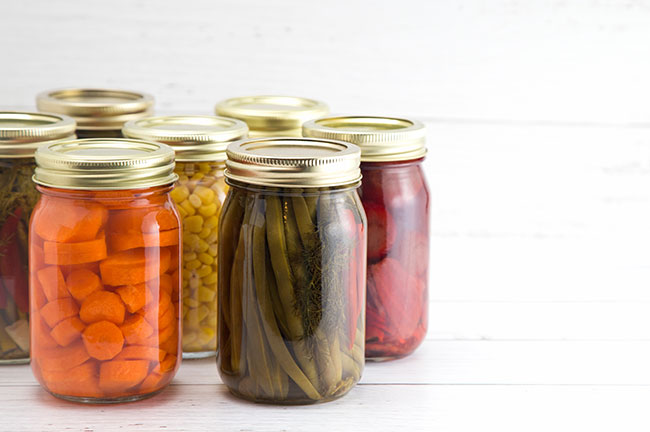
Check seals or seams in metal cans or glass jars if food froze during recent cold weather, says food scientist Karen Blakeslee.
Jan. 7, 2026
K-State Extension news service
MANHATTAN, Kan. — Cold, winter weather and the potential for power outages creates challenges for keeping food safe. Kansas State University food scientist Karen Blakeslee said frozen canned or jarred foods can be a safety hazard.
“If you have canned foods, either home canned or commercially canned, in a storage location that froze, first check for broken seals or seams in metal cans or broken glass jars in both commercial or home canned foods due to expansion of the food and liquid inside the container,” Blakeslee said.
If all preservation containers are intact, they can be saved. The texture of the food may be softer than expected.
Blakeslee recommends discarding canned foods with broken metal seams or canned foods with broken glass, which can lead to contamination. This includes home canned foods that came unsealed and thawed. “Examine the containers for signs of bulging, rusting or leaking contents. Never taste any food that has changed color or has an off odor,” she said.
“If a glass jar became unsealed but is still frozen, examine the contents carefully for spoilage. These jars can be safely used immediately or transferred to a new container and stored in the refrigerator or freezer.”
For extra safety, boil foods such as meats, fish, vegetables and poultry for 10 minutes before using.
To prevent a future food crisis during cold weather, Blakeslee suggests moving containers to a warmer location or wrapping jars or cans in paper and cover with blankets to insulate them. For best quality, choose a cool, dry, dark location. The optimal storage temperature is between 50-70 degrees Fahrenheit. Use within one year.
“Another option for vulnerable storage locations is to prop open the pantry or cupboard doors to allow warm air inside,” Blakeslee said.
Blakeslee, who also is coordinator of K-State’s Rapid Response Center for Food Science, publishes a monthly newsletter called You Asked It! that provides numerous tips on food safety. Learn more about food safety in cold weather from the K-State Extension Food Safety website.
More information is also available from local extension offices in Kansas.
***

K‑State Extension is a short name for the Kansas State University Cooperative Extension Service, a program designed to generate and distribute useful knowledge for the wellbeing of Kansans. Supported by county, state, federal and private funds, the program has county extension offices statewide. Its headquarters is on the K‑State campus in Manhattan. For more information, visit www.ksre.ksu.edu. K-State Extension is an equal opportunity provider and employer.