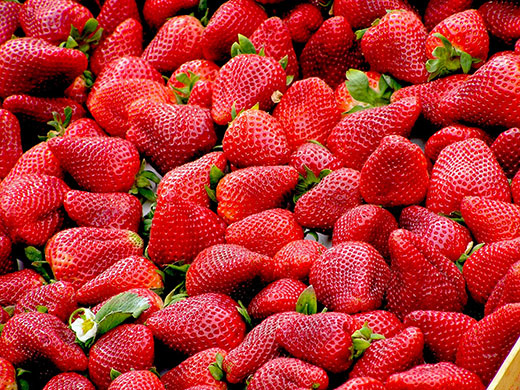
Strawberries and other foods rich in flavonoids may help delay the onset of Alzheimer's disease, research shows.
Teas, berries may help slow onset of Alzheimer’s disease
K-State food scientist says 20-year study shows positive benefits of healthy diet
Aug. 11, 2021
MANHATTAN, Kan. – There is good news for those who may be worried about the onset of Alzheimer’s disease. A recent study has shown that teas and berries are among the foods that can help delay the onset of that malady.
Kansas State University food scientist Karen Blakeslee said a study conducted at Tuft’s University by the U.S. Department of Agriculture is further evidence that a healthy diet can be beneficial in preventing Alzheimer’s disease.
The study followed 2,809 people over 20 years to determine the effects of a healthy diet on memory loss. The results were very positive.
“The study provides more proof of how the power of plants and produce is so important in our daily diets, and how it can be beneficial nutritionally and possibly protect your mental health,” Blakeslee said.
Study participants who consumed more plant foods containing plant nutrients called flavonoids were 50% less likely to develop symptoms of Alzheimer’s. Tea, berries, dark chocolate and other flavonoid-rich foods are well-known for their antioxidant, antiviral and anti-cancer properties.
Blakeslee said the Tufts study indicated that all types of tea may help delay the onset of Alzheimer’s disease. Berries also got a good grade; blueberries and strawberries are the top contributing foods for total flavonoids, “but apples, pears and oranges are also beneficial,” according to Blakeslee.
In a 2021 report titled Race, Ethnicity and Alzheimer’s in America, the Alzheimer’s Association estimates 6.2 million people in the United States age 65 and older are living with the disease. That number is estimated to grow to 12.7 million by 2050.
“If it is possible to reduce risks of chronic illness with food, why not add these to our diet?” Blakeslee said.
She added that late summer is a good time to start, with a bounty of fresh produce in grocery stores, farmers markets, or growing in home gardens. “These foods,” Blakeslee said, “can be part of a healthful diet at each meal or even as a snack.”
Blakeslee also suggests freezing summer fruits to enjoy later in the year. When certain produce is not in season, use frozen, canned or dried forms since all are beneficial.
Blakeslee, who is also coordinator of K-State’s Rapid Response Center for food science, publishes a monthly newsletter, called You Asked It!, that addresses many issues related to food science and safety.
More information on food safety also is available online from K-State Research and Extension.