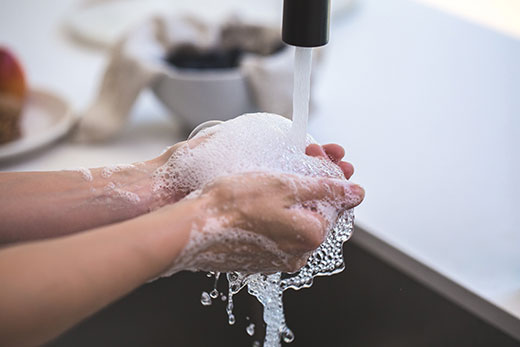
Washing hands with soap and warm water is a critical food safety step.
Food Safety Education month focuses on washing hands, fingernails
K-State’s Blakeslee urges safety when handling food
Sept. 1, 2021
MANHATTAN, Kan. – It may seem, at times, that washing hands for the recommended 20 seconds is a bit excessive.
It’s not, says Kansas State University food scientist Karen Blakeslee.
“Because our hands touch many things, the first thing to do when you get ready to prepare food is to wash your hands,” Blakeslee said.
“Our hands carry many germs or bacteria. When you prepare food and eat food, unwashed hands increase your risk of foodborne illness. This simple practice not only reduces foodborne illness risks, but even overall health risks, including respiratory and diarrheal illnesses.”
Blakeslee said making sure fingernails are clean is an important part of washing hands. Though rare, parasites – such as pinworms – have been found under fingernails.
“More commonly,” she said, “types of bacteria that can be found under fingernails include Staphylococcus aureus, E. coli or Shigella species. To help reduce risks, keeping fingernails short and using a nail brush, or at least scrubbing soap around the fingernail areas, helps remove contamination.”
The Partnership for Food Safety Education is encouraging safe handling of food during National Food Safety Education Month, which occurs each year in September.
Blakeslee said with the recent increased demand for food deliveries to homes and other places, it is important to keep those foods safe.
“Wash your hands prior to consuming delivered food,” she said. “If you cannot eat the food right away, keep hot food hot and cold food cold. Reheat foods to 165 degrees Fahrenheit. If food is left at room temperature, use it in less than two hours.”
More information about safe food handling practices is available on the K-State Research and Extension Food Safety website.
“In September, food safety is a focus of education and outreach, but food safety is important every day of the year,” Blakeslee said. “The four core steps of clean, cook, chill and separate apply each day.”
Learn more about handling food safely in the K-State Research and Extension publication At-Home Safe Food Handling: It’s in Your Hands.
Blakeslee, who is also coordinator of K-State’s Rapid Response Center for food science, publishes a monthly newsletter called You Asked It! that provides numerous tips on being safe and healthy. More information is also available from local extension offices in Kansas.