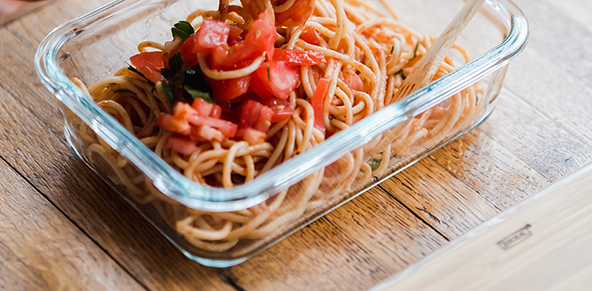
Casseroles and other food items are at greater risk of carrying pathogens if they are temperature-abused, says K-State food scientist Karen Blakeslee.
Tips to avoid foodborne illness this holiday season
K-State food scientist explains the risk of Clostridium perfringens
Nov. 9, 2022
By Maddy Rohr, K-State Research and Extension news service
MANHATTAN, Kan. — Clostridium perfringens is one of the most common foodborne illnesses in the U.S., with about one million cases a year – and yet it’s not necessarily a food pathogen that many people have heard about.
Kansas State University food scientist Karen Blakeslee said food that has been temperature-abused has the greatest risk of C. perfringens, which is a bacteria that can cause illness symptoms within 6 to 24 hours of eating contaminated food.
“(Temperature-abused food) means the food was kept at unsafe temperatures, between 40 and140 degrees Fahrenheit for long periods of time, which allows pathogens to grow and multiply,” Blakeslee said.
Foods commonly affected include:
- Soup.
- Stew.
- Gravy.
- Meat.
- Poultry.
- Casserole.
“Outbreaks tend to happen where large groups of people are served the meal,” Blakeslee said, noting that outbreaks, associated with C. perfringens are seen most often in November and December.
A key prevention step, according to Blakeslee, is to use a food thermometer to ensure foods are cooked and held at safe temperatures. Hot foods should be kept above 140 degrees F and cold foods should stay below 40 degrees F.
Blakeslee recommends using hot plates, slow cookers, tabletop roasters and chaffing dishes to keep hot food at a safe temperature. Keep cold foods refrigerated until serving. Set dishes of cold food in a larger container of ice to help keep food cold.
“The important thing is not to forget about the food. Don’t let food sit for for more than two hours, without temperature control, as that will invite foodborne illness to an otherwise happy occasion,” Blakeslee said.
While C. perfringens is not usually fatal, it can cause abdominal cramps, gas, diarrhea and sometimes nausea and vomiting.
“As you plan your holidays, remember to keep hot food hot (and) cold food cold. And cool leftovers safely by dividing large quantities into small quantities to cool quickly,” Blakeslee said.
Blakeslee, who also is coordinator of K-State’s Rapid Response Center for food science, publishes a monthly newsletter called You Asked It! that provides numerous tips on being safe and healthy.
More information is also available from local extension offices in Kansas.