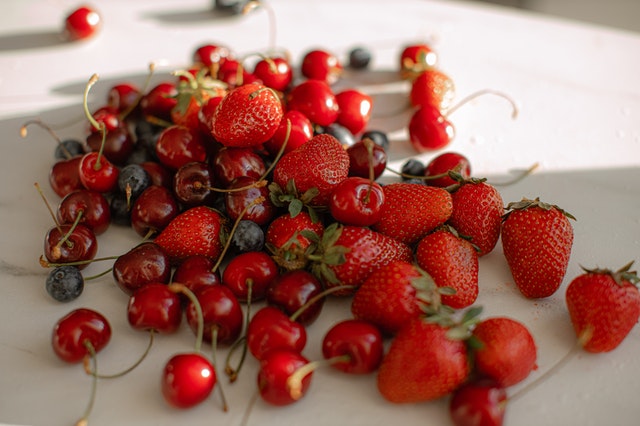
 Fresh fruit is more abundant during the summer months.
Storing fruits and vegetables properly helps ensure maximum enjoyment
K-State food safety specialist says different approaches are needed for different types of produce
June 7, 2023
K-State Research and Extension news service
MANHATTAN, Kan. – Now that summer is here, fresh fruits and vegetables are available everywhere, bringing with them the challenge of proper storage so we can enjoy every bite.
Kansas State University food safety specialist Karen Blakeslee said storage methods depend on the types of produce that we keep and where we keep them.
Summertime favorites such as fresh berries, cherries, grapes and stone fruit including apricots are highly perishable and need to be refrigerated. Berries, especially, can become moldy in just a couple of days. Apples, on the other hand, can be kept at room temperature if they’re going to be used within seven days.
Leafy greens, celery, carrots, broccoli, green beans and asparagus all need to be refrigerated as well. With asparagus, particularly, “it's a good idea to put the bottom ends in a cup of water and store in the refrigerator,” said Blakeslee, coordinator of the Rapid Response Center in the university’s Department of Animal Sciences and Industry. “It helps keep asparagus hydrated so they don't wrinkle up and dry out.”
Some types of produce need a little more ripening when they’re first brought home. Blakeslee recommends leaving nectarines, peaches, pears and plums on the counter so they can ripen and then put them in the refrigerator.
“If peaches are a little hard, put them in a paper bag, fold it together and let the natural ethylene gas help the peaches ripen,” she said. “Another trick is to place an apple in the bag, to speed ripening.”
The key is to watch those fruits closely because they can ripen quickly.
Plenty of other types of produce can be left at room temperature: Bananas, melons, citrus fruits, pineapple, tomatoes, onions, garlic and potatoes.
Blakeslee offered a couple of tips for the trickier of these foods, though: If bananas are starting to show brown spots, they need to be refrigerated, frozen or made into a smoothie or banana bread. Onions and garlic should be stored away from potatoes because they can cause potatoes to sprout faster.
“With all produce, especially any of these that are at room temperature, once you cut them open – and if you have leftovers – you have to refrigerate them to keep them safe to eat,” Blakeslee said.
Other tips for fresh fruits and vegetables:
- When selecting melons at a store or farmers market, Blakeslee recommends looking at the bottom of a melon rather than thumping or tapping on it to judge its ripeness.
“It's better to look at the color of melon rind – where it sits on the ground – and look for a buttery yellow color,” Blakeslee said. “The thumping? Some people swear by it, and it can be deceiving. It’s better to look for that yellow color.”
Likewise, when the stem area of a cantaloupe is no longer green and you can detect the signature smell of the cantaloupe, it’s ready to be eaten. Rinse the outside of melons with water and scrub with a produce brush before cutting them into pieces.
- Take advantage of the plastic bags available in the produce section of the grocery store. They provide a barrier between fresh produce and fresh meats to prevent potential cross-contamination.
- Don’t wash leafy greens or berries immediately after bringing them home and before putting them in the refrigerator. That could shorten their shelf life.
“In most cases it is usually better to wait to wash produce until you're ready to use them,” Blakeslee said, pointing to an alternative. “One little trick that I like to do – and it seems to work pretty well with leafy greens – I place a paper towel in the container to help absorb any residual moisture. It actually helps them last a little longer.
Gardeners often end up with far more produce than they can eat or give away while it’s ripe, and that’s where proper food preservation techniques come in. Learn more about preserving food safely on the Rapid Response Center Preserve It Fresh, Preserve It Safe website.
Blakeslee publishes a monthly newsletter called You Asked It! that provides numerous tips on food safety. More information is also available from local extension offices in Kansas.