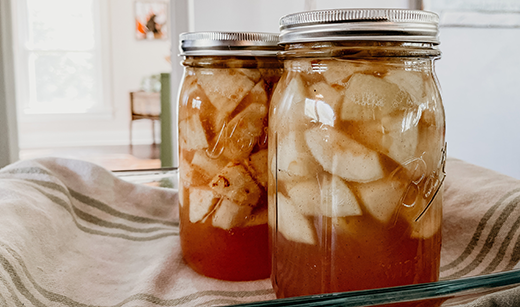
When canning apples or peaches, the color can be protected by using ascorbic acid, which prevents the food from turning brown, said K-State food scientist Karen Blakeslee.
What color should canned foods be?
K-State food scientist explains why preserved foods change color
Oct. 3, 2023
By Maddy Rohr, K-State Research and Extension news service
MANHATTAN, Kan. – It is the season of canning from apples to cauliflower, pears, peaches and beets. And if you’re concerned about why a canned food has changed color, Kansas State University food scientist Karen Blakeslee said it can be for a variety of reasons.
“In canning, if there is an unexpected color change, that can be a signal that spoilage is present and can affect the quality of the food,” Blakeslee said. “For example, if the stored jars of food are exposed to light, that can cause the food to change color and could cause spoilage.”
Blakeslee added that if food inside the jar is above the liquid at the top of jar, that food can discolor during storage but still be safe to eat.
“Some foods such as pickled cauliflower or garlic can turn pink or blue because the food may be immature or pigments in the food react with the acid in the pickling solution, causing color changes. This doesn’t look right, but is not harmful,” Blakeslee said.
Blakeslee recommends the following to keep canned food safe:
- Keep all produce cool after harvest.
- When using the hot pack method, do not overcook or heat to too high of temperatures. Excessive heat changes natural food pigments.
- Use correct processing methods and time to reduce discoloration.
- Pressure canning can be used to can pears, but it can cause pink discoloration in canned pears. Water bath processing is a better method.
“If the fruit grew in dry weather, it often turns pink and cannot be prevented. While the color doesn’t look right, the pears are safe to eat,” Blakeslee said.
Additionally, garlic can become greenish or purple if it is immature or not completely dry before canning. Red beets may lose color if overcooked or over-processed before canning.
Blakeslee said some color changes can be prevented.
“When canning apples or peaches, the color can be protected by using ascorbic acid, which prevents the food from turning brown,” Blakeslee said. “But some foods, like green beans, will change from bright green to olive green during canning and that is a normal color change that cannot be prevented.”
Blakeslee, who also is coordinator of K-State’s Rapid Response Center for Food Science, publishes a monthly newsletter called You Asked It! that provides numerous tips on food safety. More information is also available from local extension offices in Kansas.